Old Faithful Geyser
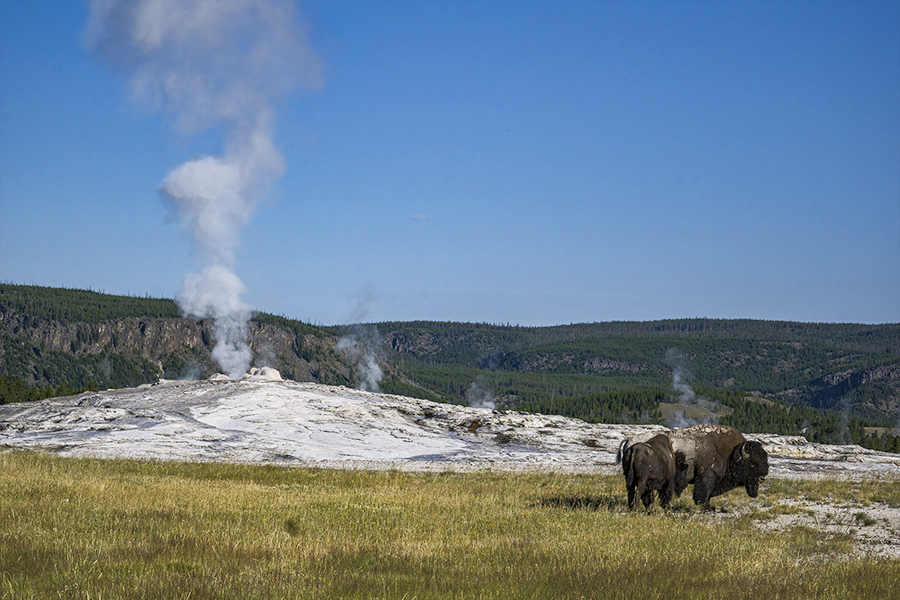
What is Old Faithful? In my observations, it is:
- Mighty pressure-resistant rock.
- Water, a lot of water that is very old.
- Pressure, oh, so much pressure.
- Predictable and dependable.
- Heat.
- Mystery.
- History.
- Rare.
- Iconic.
- Excitement, enthusiasm, joy, wonder, and disbelief.
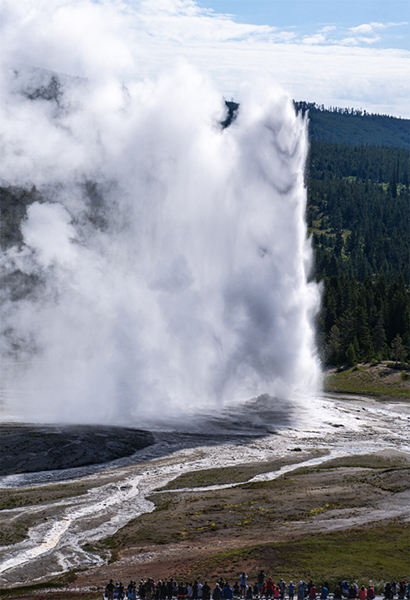
Most people in the civilized world have heard of the iconic Old Faithful Geyser. Old Faithful Geyser isn't an American thing; it's a global phenomenon. You can listen to many languages spoken by excited kids and adults on the boardwalk any day of the week. I love watching and listening to the Old Faithful visitors, especially the ohs and ahs, as the water starts up and reaches its maximum height. I have to smile when I hear the sounds during preplay splashes. (Small water splashes before the primary eruption.) There is a general sucking in of air in excitement, followed by a slow release as people realize Old Faithful Geyser isn't erupting.
There are just over 900 geysers worldwide. Over 500 of those geysers are in Yellowstone National Park. The Upper Geyser Basin, the Old Faithful area, is home to 150 geysers. (Read about the Upper Geyser Basin here.) In my book, that makes an Old Faithful Geyser eruption a rare event.
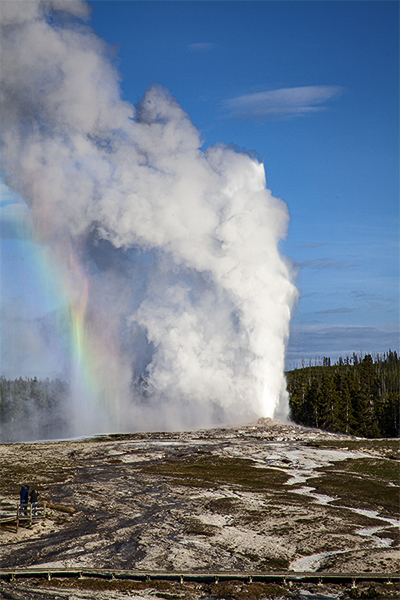
Where does the water come from? It isn't the Firehole River that is just yards away. Water from any of the features fell as rain or snow onto the basin. It sinks through cracks and crevices until it gets close enough to become superheated from the magma chamber. Once the water gets hot, it starts the return trip. That trip down and back up can take 100 to 1,100 years. So, if you get wet, you have taken an ancient bath.
The heat for any of the geysers comes from two magma chambers under Yellowstone. The one initially discovered is 3 to 10 miles (5 to 17 Km) below the surface. That one consists of hot rhyolite rock, with 5-15% melted rock. The largest and lowest hot chamber is 12 to 30 miles (20 to 50 Km) beneath the surface. Basalt makes up this chamber, which is only 2% melted. Both rhyolite and basalt are volcanic rocks with silica. Rhyolite has a high silica content, while basalt has a low silica content. The upper chamber is 55 by 25 miles (90 by 40 Km), while the lower chamber is 4.5 times larger than the top chamber.
When the water gets hot, it is very hot and is called superheated. Research shows that the water is over 400°F (204°C) near the hotspots. The water is superheated because it is extremely hot and doesn't boil. The water doesn't boil at depth because of the pressure from the water and rocks above it. It hasn't been determined at what point on the return trip the water starts to boil. Based on a scientific study, we do know that the water in Old Faithful is boiling at 48 feet (14.6 m)—more on that study below.
Once the geyser's system rocks are hot enough and sufficient pressure is released, the geyser, such as Old Faithful, will erupt.
The reality is that scientists still have a long way to go to understand how and why geysers erupt. Many mysteries abound. As scientists develop new scientific tools, we continue to learn more about these fascinating natural wonders.
In 1870, the Washburn expedition arrived and camped at an unknown geyser for a day and a half. Someone realized that this geyser went off at a persistent interval. It would be this first government-sanctioned expedition that would name that geyser Old Faithful. Who exactly suggested the name is unknown. Another unknown person wrote about their ride into what would become the Old Faithful area. He wrote, "We emerged from the woods opposite Old Faithful just as it was giving vent to its internal motion. From that time, our spirits rose and all our personal woes and sufferings were forgotten."
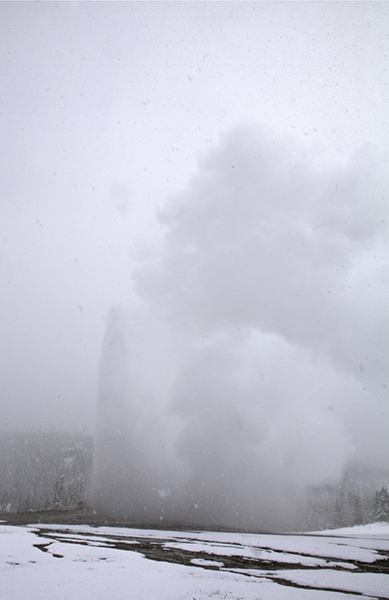
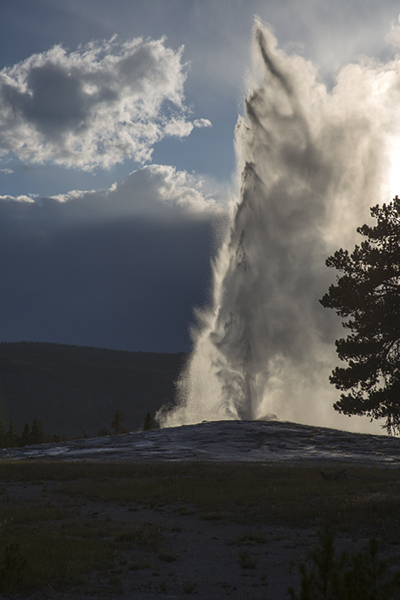
The shortest documented interval for Old Faithful was 63-75 minutes between eruptions. So no, Old Faithful has never erupted hourly on the hour. The height of Old Faithful varies from eruption to eruption but persists between 106 and 189 feet. Many people have questioned the rangers about the height, thinking it was higher or lower than they remembered. Remember, you are taller than you were at 10. Plus, 50 years ago, people were allowed closer to the geyser. Plus, when you saw it before, you may have seen a taller or shorter eruption than today's eruption. Plus, memories get enhanced or diminished with time if you are like me.
Yes, intervals have gotten longer over time. After the earthquakes of 1959 and 1983, the intervals have gotten longer. Change is constantly occurring in Yellowstone and will continue. The rangers will adjust the interval if Old Faithful frequently erupts outside the ±10-minute window.
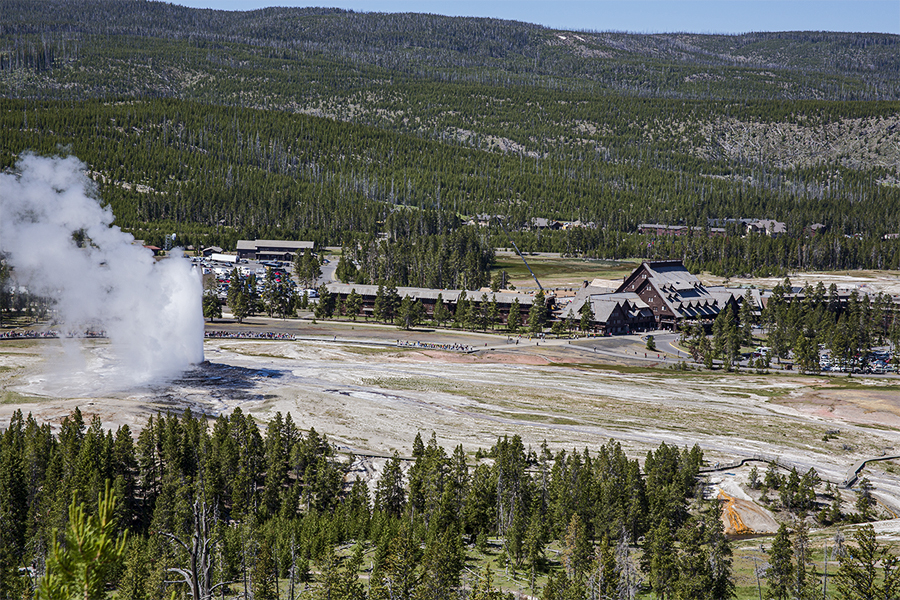
I have shown you various pictures of Old Faithful, but I need more space and time. If I were to add more images, they would be of Old Faithful erupting while I was on Geyser Hill or the bike path going deeper into the basin. How about an eruption at sunrise or sunset? These are all lovely opportunities to make a lasting memory and to fall in love with watching geysers. I have seen hundreds of Old Faithful eruptions, and none are the same. I will never tire of watching Old Faithful or any geyser "...giving vent to its internal motion."
If you are interested in how Old Faithful Geyser is predicted, you can view my YouTube presentation by clicking the image below.
If you want to try your hand at predicting Old Faithful yourself, review this page.
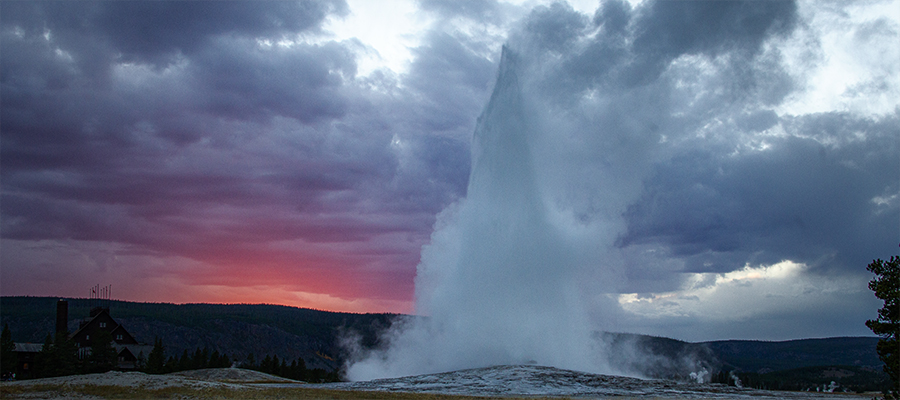
Old Faithful at Sunset
Old Faithful, sunset, and the Old Faithful Inn make for a fantastic evening.
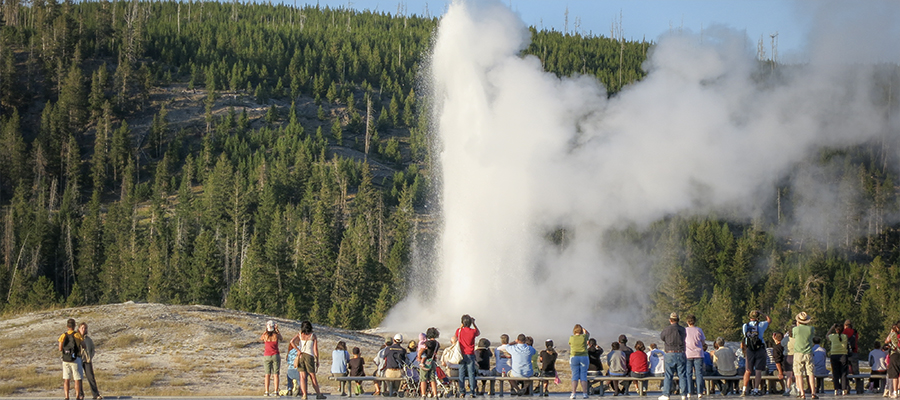
Old Faithful
Watching Old Faithful is a family or group event. It is fun to hear others react to the spectacle.
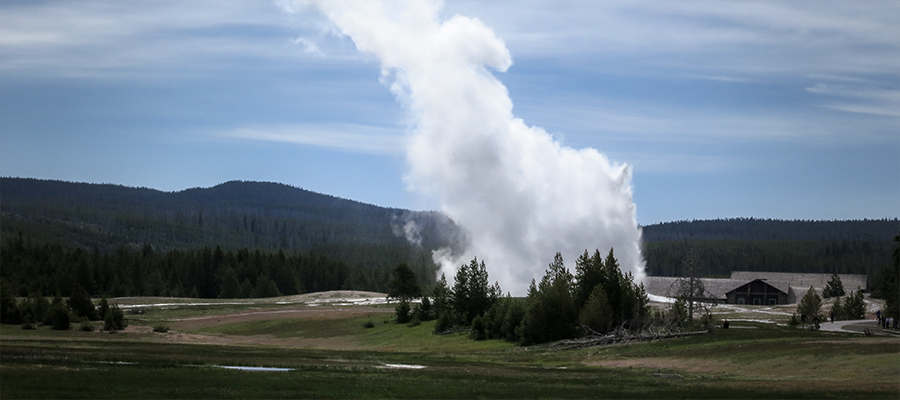
Old Faithful
Viewing Old Faithful from the bike bath across from the Lower General Store.
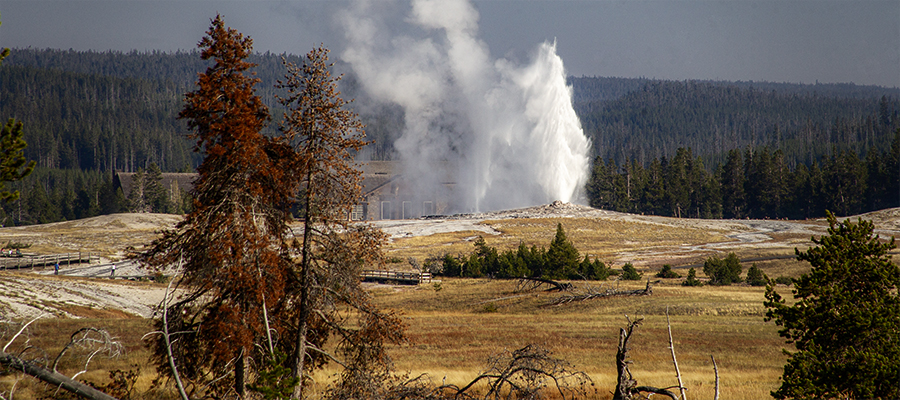
Old Faithful from Geyser Hill
There are many places or viewpoints to see Old Faithful. All have their own advantage.
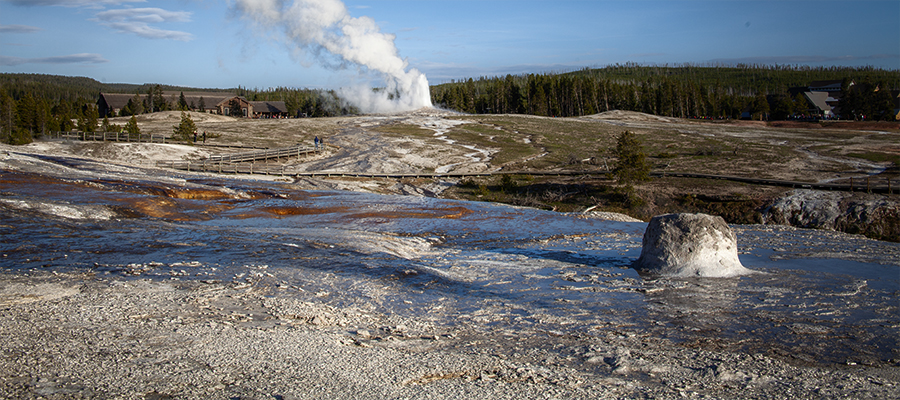
Beehive Geyser Cone
Beehive Geyser cone is in the foreground, looking over the river at the erupting Old Faithful Geyser.
In an authorized scientific study in 1991, the California Institute of Technology, Arizona State University, and NPS introduced a video camera into the Old Faithful vent. The video is fantastic. Please check it out by clicking here.