Black Bears
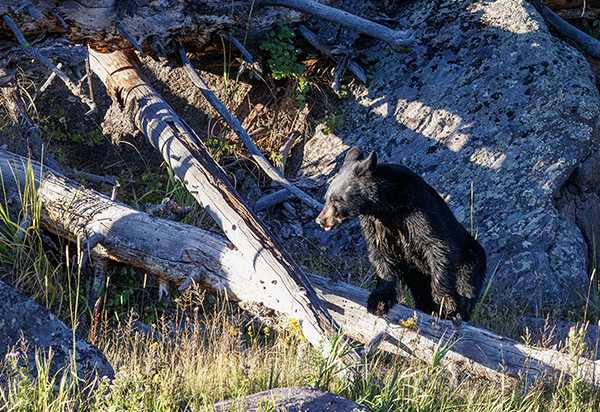
According to the 2025 Resources and Issues Handbook, black bears are common in Yellowstone National Park at any given time. Black bears are one of two bear species in the park. There are approximately 150-200 grizzly bears that join them. Black adult male bears weigh 210 - 315 pounds, while the female bears weigh 135 - 200 pounds. The Ursus arctos horribilis (grizzly) is bigger than the black bear, Ursus americanus. Both bear species can live 15 to 30 years.
How do you identify a black bear? A black bear's rump will be higher than its shoulders due to muscle buildup from climbing trees. A profile of its forehead to snoot is almost a flat line. Their ears are larger than the grizzly's ears, more erect, and pointed.
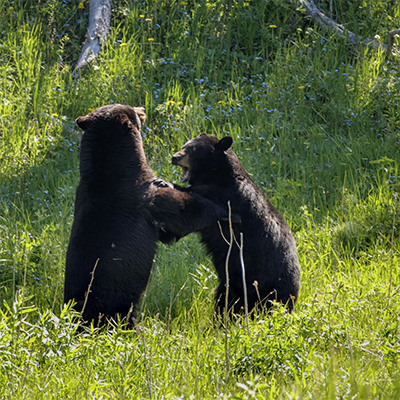
Though called a black bear, a black bear can be black, cinnamon, brown, or blond in color. A momma bear can have cubs the same year with different coat coloration. Black bear males, called boars, will attempt to kill any cubs not their own so they can breed with the mother.
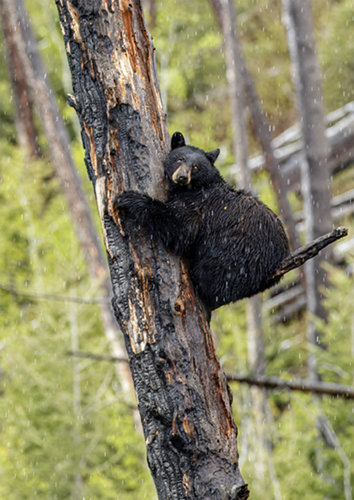
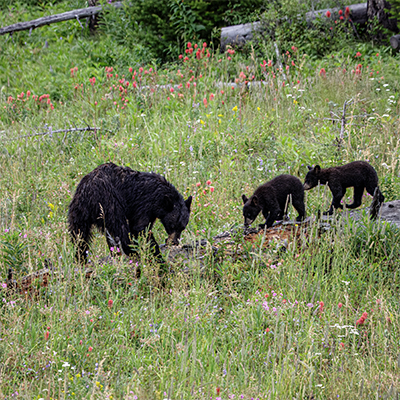
Females usually deliver two cubs in mid-January to early February. During delivery, the female is semicomatose, giving birth to two hairless, blind, and toothless cubs. The babies will nurse and sleep while the mother sleeps.
Cubs will stay one more winter after the birth winter with their mother to learn the ropes of being a wild black bear. The year of birth of both black bear and grizzly bear cubs is called COY, cub-of-the-year.
Black bears are slightly slower runners than grizzly bears, which can run up to 40 miles per hour (64 km per hour). A black bear can exceed 30 miles per hour (48 km per hour), topping out at around 35 miles per hour (56 km per hour).
While in Yellowstone, you can often see the same bear(s) in the same general area at about the same time day after day. People frequently park in the general area for hours, hoping to get pictures of the bears.
Black bears are better at smelling than humans. Their nasal mucosa area is around 100 times larger than that of humans.
Black bear claws are shorter than those of a grizzly bear and have a slight curve that allows them to climb trees. But just because the claws of the grizzly aren't designed to climb trees, grizzly bears can and will climb trees.
One critical reminder. All animals in Yellowstone and other National Parks are wild. They need to be respected for that fact. The females will defend their babies at all costs. Enjoy the wildlife, but respect it. Keep your distance. Never block their path. Never get between momma and babies. Don't be the person who reportedly set off up the hill by the road with the intent to put his small child on the back of a bear for a picture.
Many people have asked the rangers whether they have a picture of a grizzly or black bear, showing the ranger their camera screen. To learn how to tell the difference, check out this page.
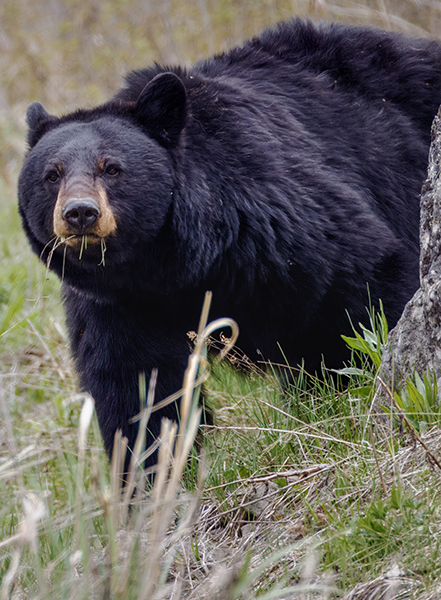
Below the picture carousel, follow the links to the different animals featured on this site.
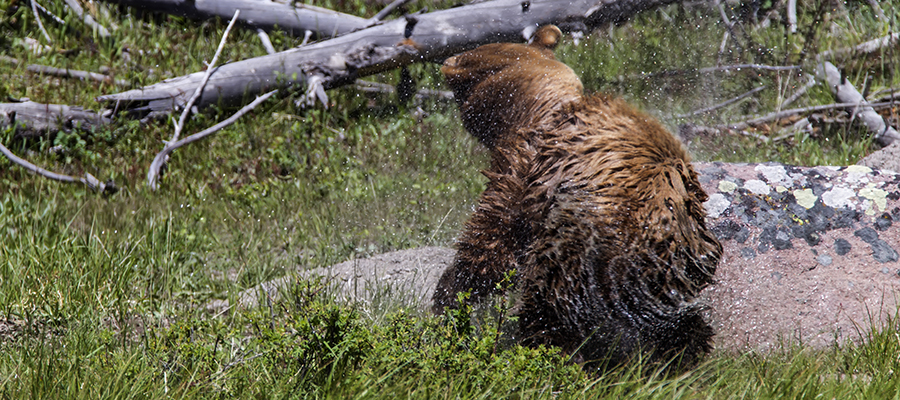
Drying Out
This black bear had just emerged from the river and is shaking off excess water.
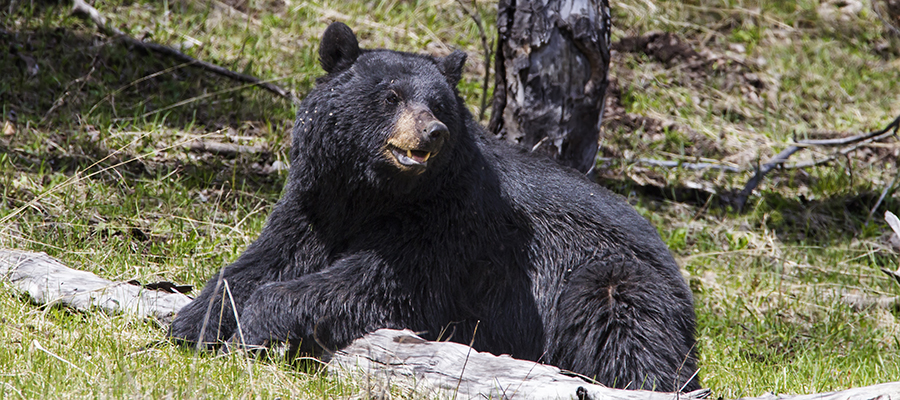
Black Bear Male
This was early May, and this guy looks healthy, strong, and well-nourished as he sunned himself.
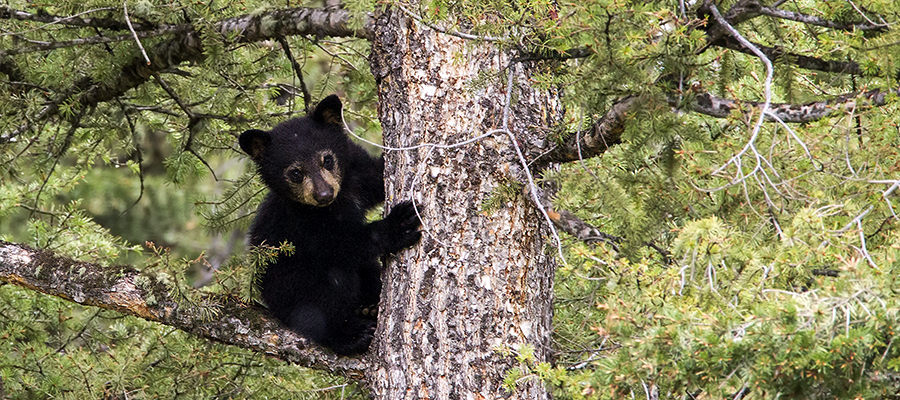
A Black Bear COY
This little twin was sent up in the tree by its mother near the Tower Roosevelt Junction. Its twin was elsewhere in the tree.
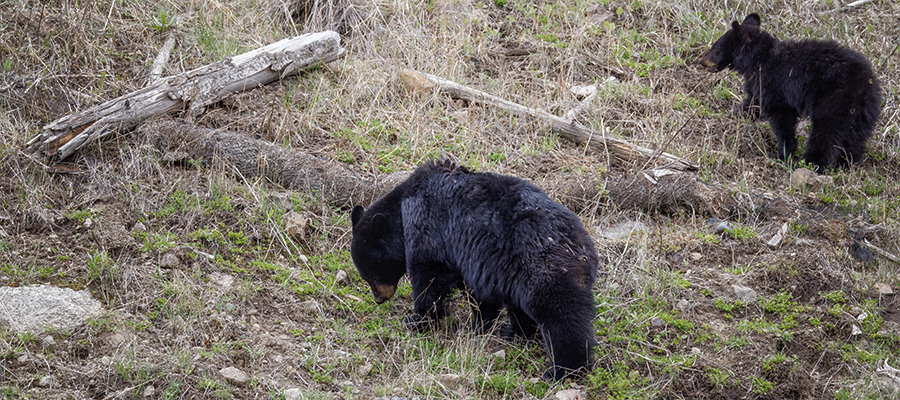
Yearling Cub
This momma and her yearling were seen in early May of 2025. Soon, this mother will chase this yearling off to survive on its own. Then she will find a suitable mate.
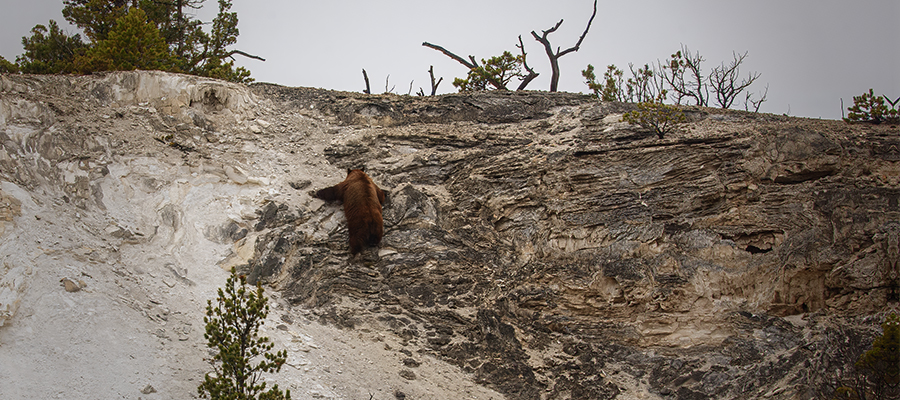
When You Want Something Badly Enough
This black bear was determined to take the closest, but most challenging, route to the top of the Upper Terraces at Mammoth Hot Spring.