Pronghorn
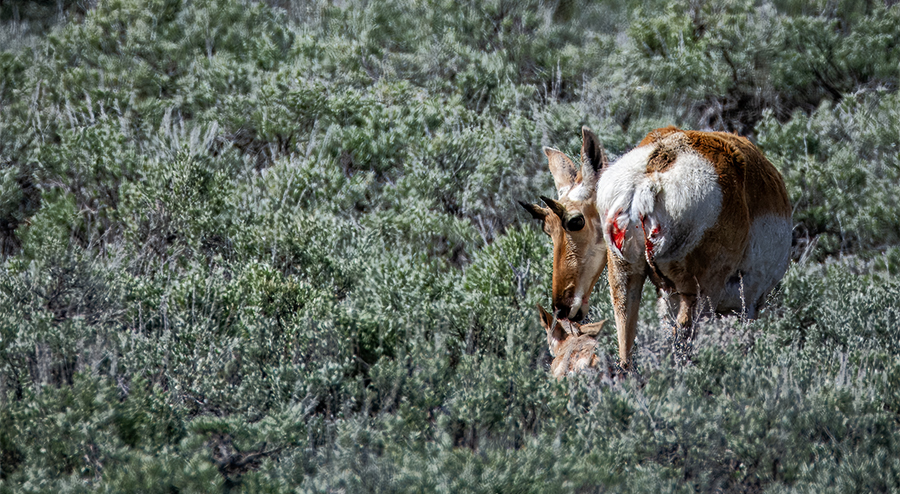
There are no native antelopes in America. The animal found in North America's west is the pronghorn, which Americans have dubbed the American Antelope. The pronghorn is the last member of its biological family, but its population is growing. Wyoming and Yellowstone National Park are ideal places to see these animals in their natural habitat.
The Antilocapra americana, pronghorn, is the fastest land animal in the Western Hemisphere and the second fastest in the world, after the cheetah.
Cheetahs can run 61-70 mph (98-112.7 kph) for only 30 seconds, or about 700 yards.
Pronghorns can run slightly slower at 50-60 mph (80.5-96.6 kph). The big difference is that they can cruise at 30 mph (48.3 kph) for over 20 miles. They can do sprints at 45-50 mph (72.4-80.5 kph) for short periods.
Newborns can walk within 30 minutes and outrun a human in a couple of days.
The question becomes, how do they run so fast? It starts with their anatomy; the pronghorn are built to run. Their bone structure is extremely light. Their hair is hollow. Two long, cushioned, pointed toes act as shock absorbers. They have large windpipes, hearts, and lungs for the intake and circulation of air. While running, they run with their mouths open, which acts like an air scoop.
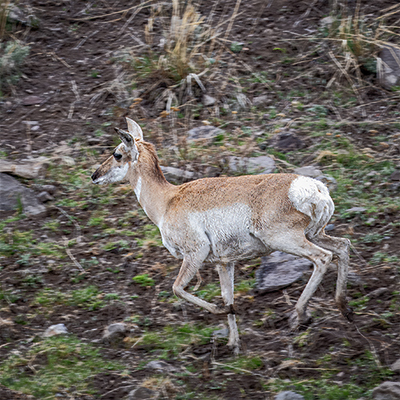
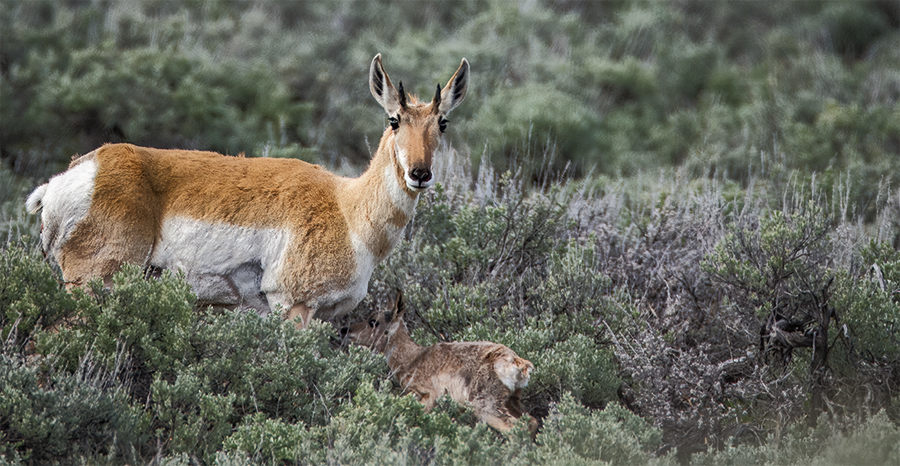
A female, doe, pronghorn can become pregnant at 16-17 months of age. Males are sexually mature at 1 year old but will not breed until 3-4 years old. The first pregnancy often results in a single fawn. Later pregnancies usually result in twin births. Fawns in Yellowstone are typically born in May or June. Newborns can normally walk within about 30 minutes after delivery. They can outrun humans in just several days.
Another way to identify male vs female pronghorns is to look for the black neck strip; those are the males. Look at the picture on the right.
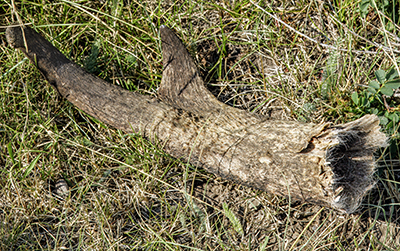
Looking at the horn, notice how the male's horn curls back to its rump at the top with a small prong on the front. Guess what? That is where the name pronghorn comes from.
Pronghorns are one of Yellowstone's seven native ungulates or hoofed animals.
The pronghorn's eyeballs are the largest of any North American ungulate. They are 1.4 inches (36 mm) in diameter. The positioning of the eyes within the skull allows the pronghorn to have a 300-degree arc of vision without moving its head. In contrast, humans have slightly over 210 degrees of vision without moving their heads. The pronghorn can see movement up to four miles away.
Pronghorns can jump fences, but they don't. They prefer to slide under them instead. Pronghorn fossil records go back 28 million years. European settlers didn't start settling the West and building fences until about the 1840s. Pronghorns have a history of eons, during which they never had to jump over things like fences; instead. So they will now slide under them.
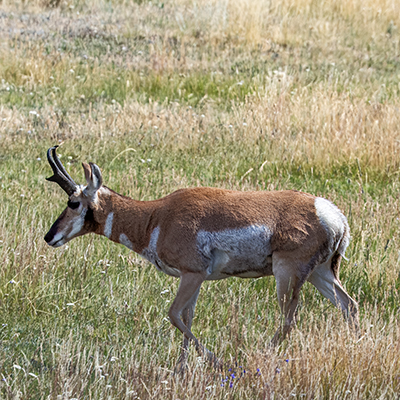
Check out this page to learn more about the differences between horns and antlers and how pronghorn horns doesn't fit.
Below the picture carousel, follow the links to the different animals featured on this site.
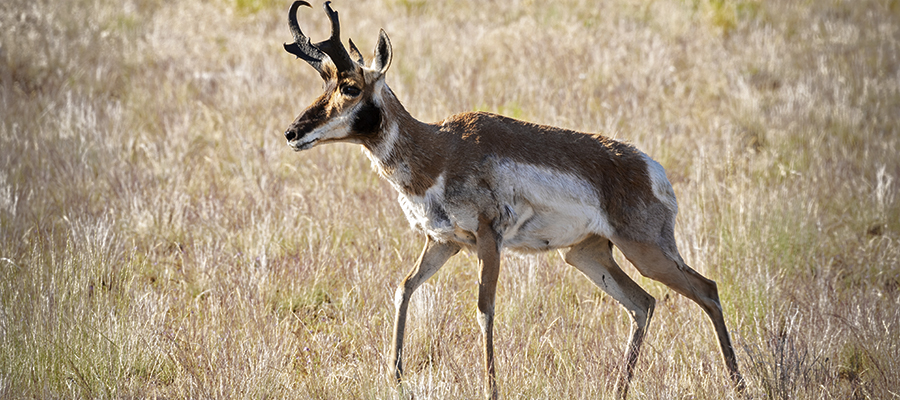
Pronghorn Buck
Look at those thin legs. Those legs are fragil and that is why pronghorns go under and not over fences.
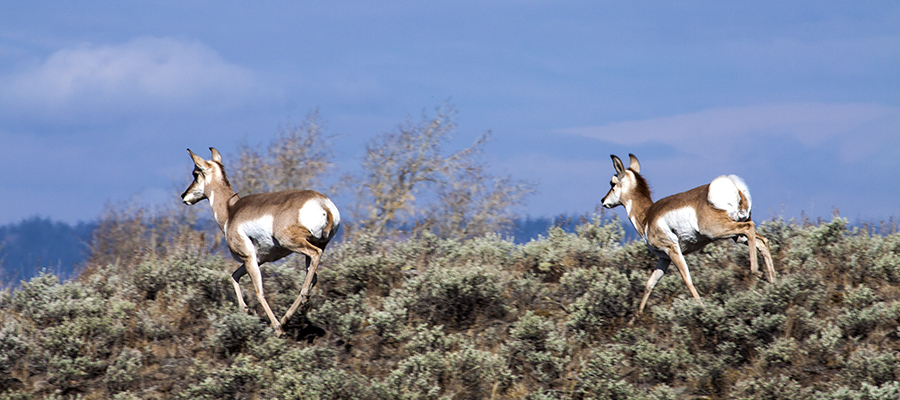
Running Pronghorn
A pair of pronghorn does running over a hilltop.
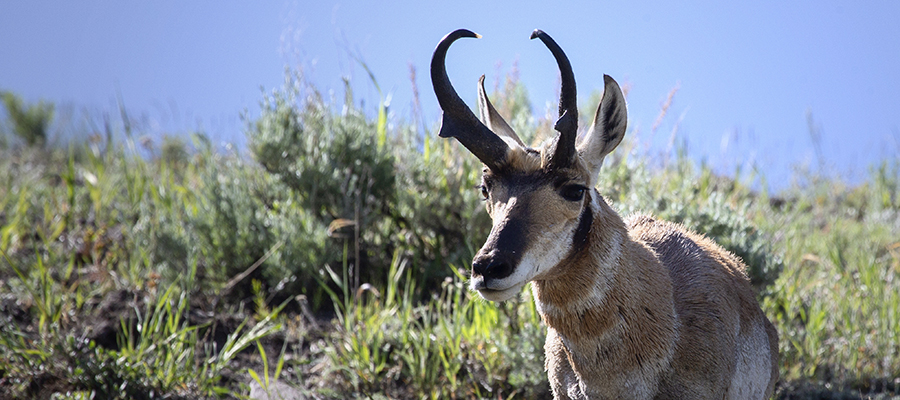
Horns of a Pronghorn
Mature male pronghorn with an impressive set of horns.
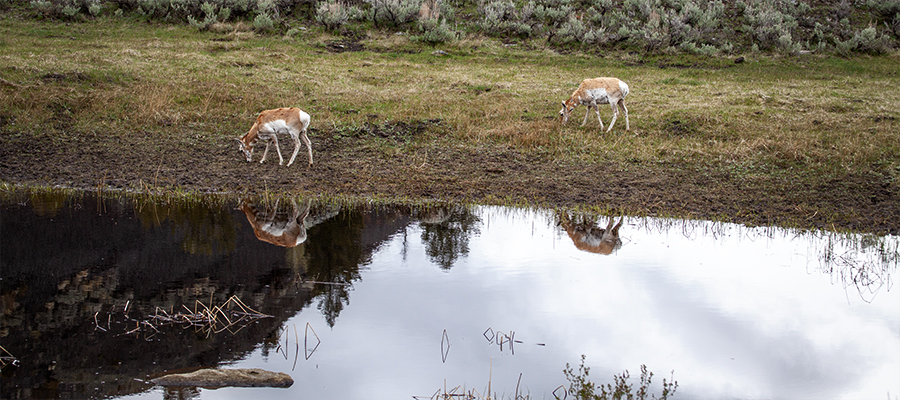
Pronghorn Reflections
Reflections of pronghorns grazing quietly by a pond.
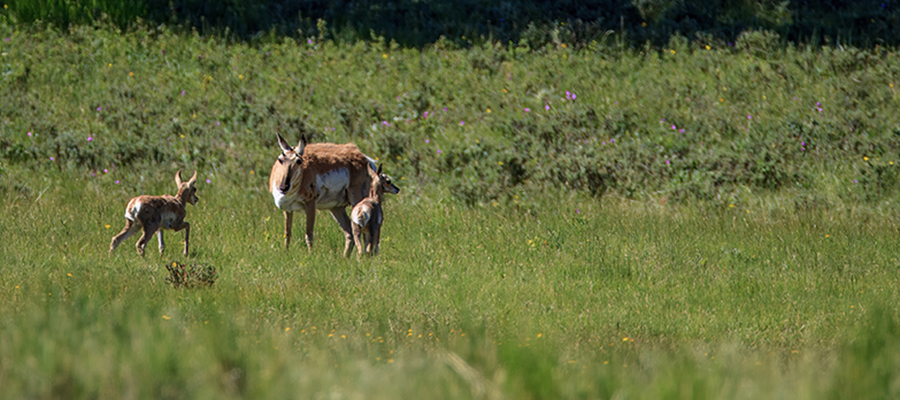
Doe with Twins
Mommy pronghorn, doe, with growing twins.