Raptors or Birds of Prey
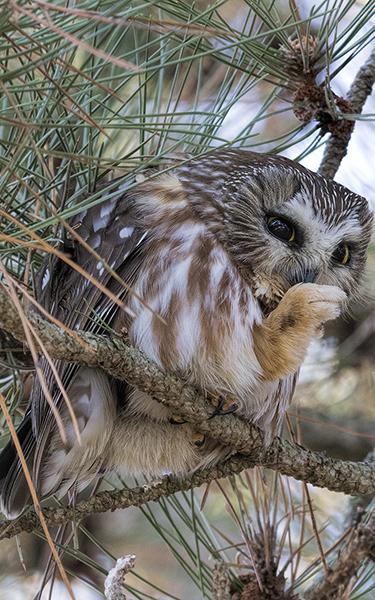
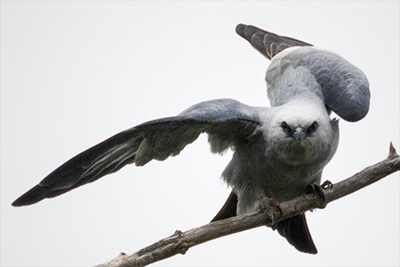
Birds of Prey, also known as raptors, eat meat only. Their diet includes rodents, amphibians, fish, mammals, reptiles, insects, and other birds.
In addition, they share three other characteristics. Including:
- Sharp eyesight
- Strong, sharp talons
- Strongly hooked beak
This group of birds includes hawks, owls, eagles, vultures, and falcons. Worldwide, there are approximately 560 species of raptors. Thirty-five (35) of those are in North America.
Raptors have large eyes, and depending on the species, the eyes can take up to a quarter to almost three-quarters of the bird's skull.
They can see farther than humans. Hence the phrase "eagle-eyed."
While birds of prey cannot move their eyes around like humans, they have a better trick. Instead, they have extra bones in their necks, allowing them to move their entire head. Owls and some other raptors can turn their heads 270 degrees.
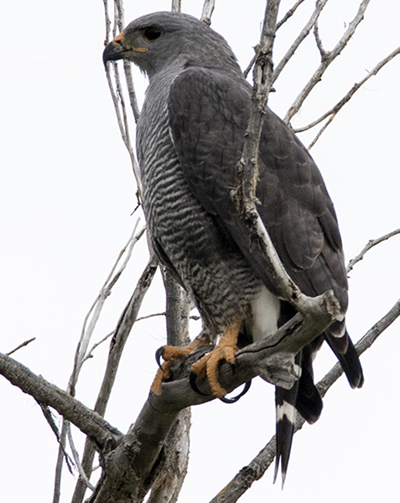
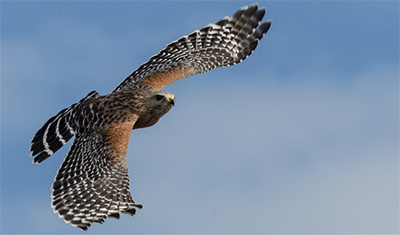
Raptors' talons are very sharp. Each foot has four talons. A talon has two components: the bone that is covered by a sheath made of the same material as your nails: keratin. Talons are designed to grab and carry things. Raptors use talons to capture, subdue, and kill their prey. They are adapted to holding their prey on tree limbs while using their beaks to tear the meat into bite-sized pieces.
The Peregrine Falcon, not pictured here, is the world's most widely distributed bird of prey. This raptor is also the fastest animal in the world, diving at speeds over 200 miles per hour. It kills its prey in the air by closing its talons and ramming it into the prey, knocking it out of the sky.
Like the talons, raptors' beaks are bone-covered by keratin. Raptor beaks are curved and end in a sharp point. This enables the bird to bite, tear, and, in some cases, kill its prey. Strong jaws also support the beak's structure.
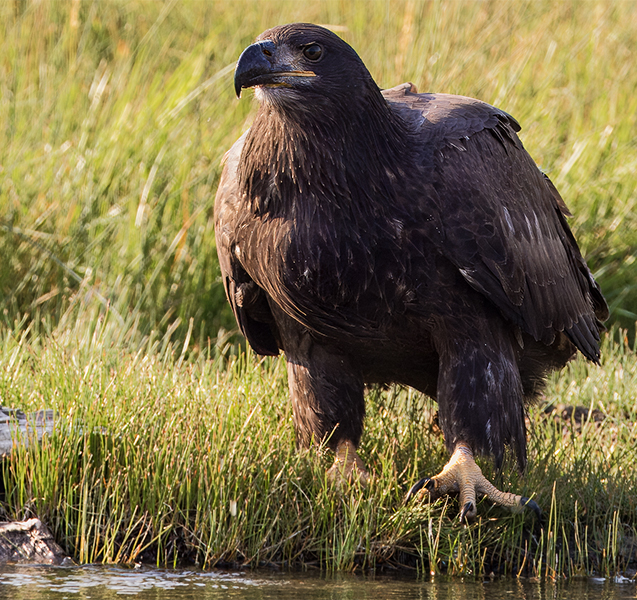
Below the picture carousel, follow the links to the different birds of prey featured on this site.
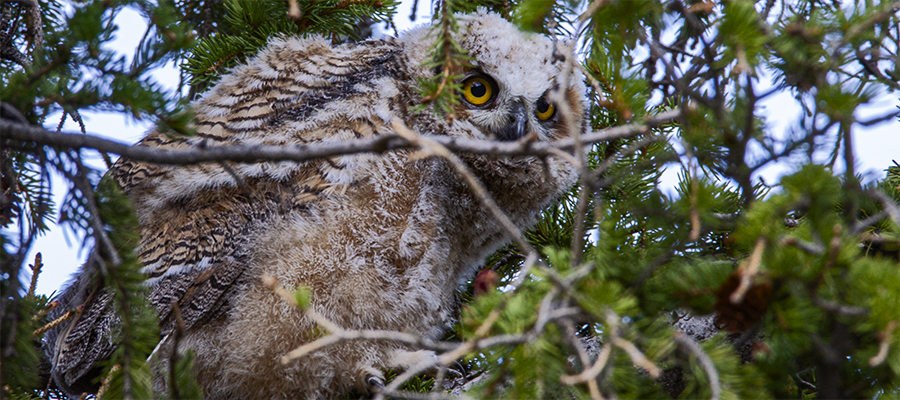
Great Horned Owlet
Only one or two owlets survive to fledge out of a clutch of one to four eggs.
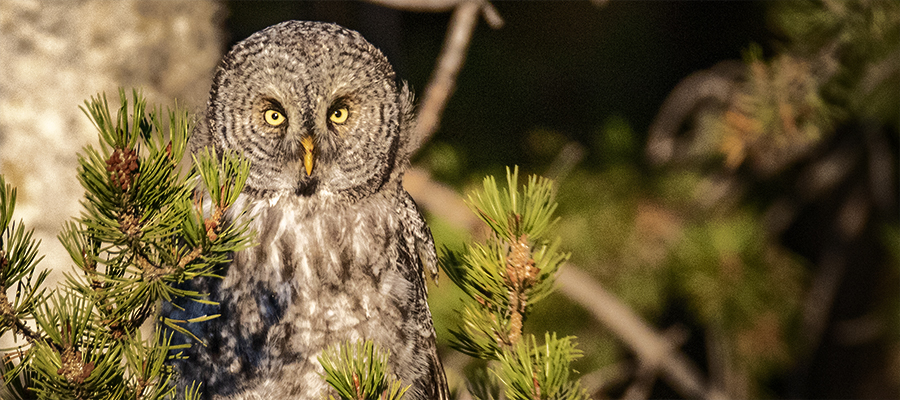
Great Gray Owl
Great Gray Owls look big, but they are a fluff ball of feathers.
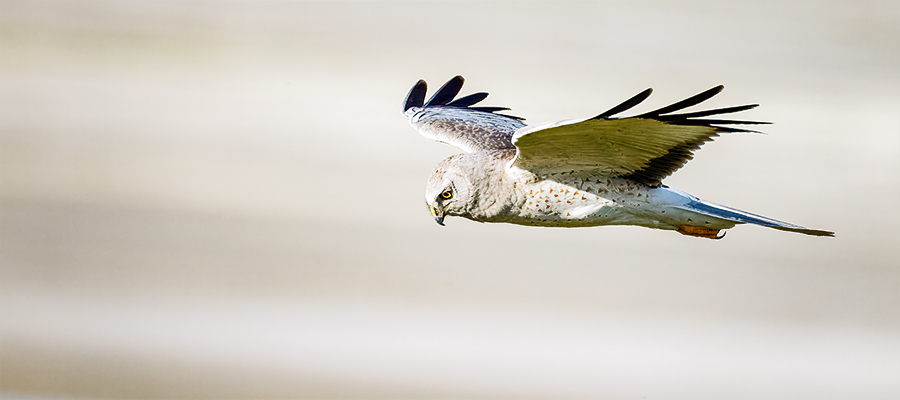
Norther Harrier
Male Northern Harrier flying low over the field. Look for them, flying low looking for dinner, and the white patch on their rump. Two characteristics that help with identification.
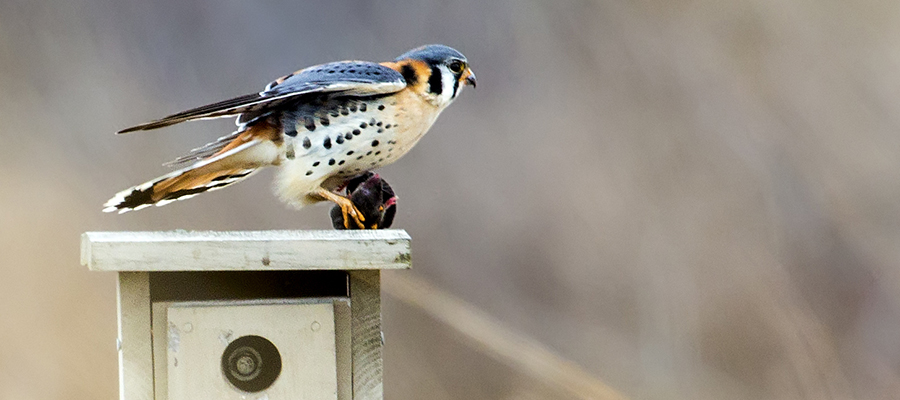
American Kestrel
American Kestrel with dinner in talon. The Kestrel is a small falcon. It may bob its tail when perched. Look for that behavior.
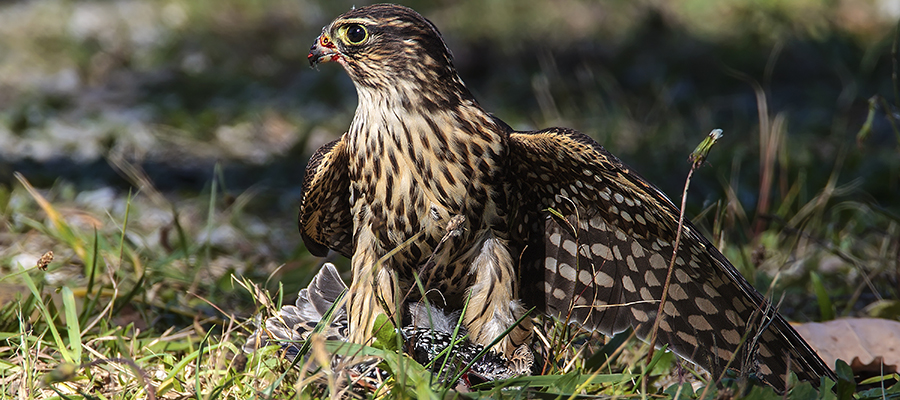
Merlin
This small and fierce falcon preys on small songbirds and shorebirds. Merlins take over old nests of other raptors or crows to raise this years eggs.