What is Waterfowl?
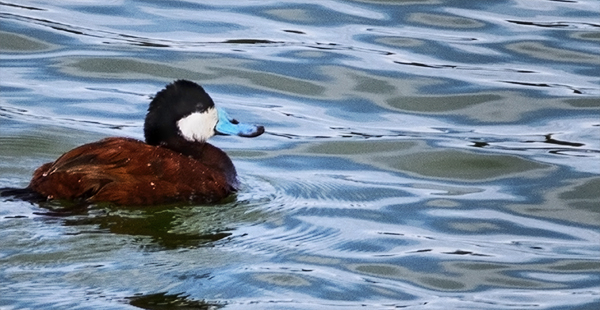
Waterfowl, or wildfowl, as Europeans would say, include ducks, geese, and swans. This classification of birds has probably been the most admired and exploited bird group in the world. The Eastern Graylag Goose was thought to have been domesticated around 4,500 years ago. The earliest recognizable waterfowl fossils date back perhaps 40-50 million years ago.
Waterfowl inhabit all continents except Antarctica. Penguins are flightless birds that belong to the order Sphenisciformes, different from the waterfowl's Anseriformes order. Anseriformes is divided into three families: Anhimidae (screamers, three species), Anseranatidae (only the Magpie-Goose), and Anatidae (waterfowl, 174 species).
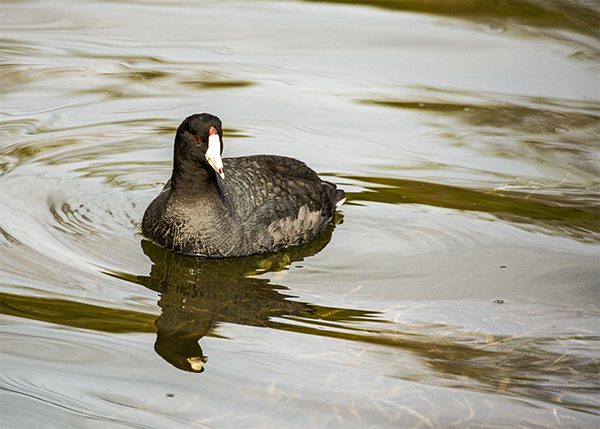
For those who have seen the American Coot, that bird is not a duck. For one thing, it has no webbing on its feet. They belong to the family Rallidae.
Ducks are smaller than geese and swans.
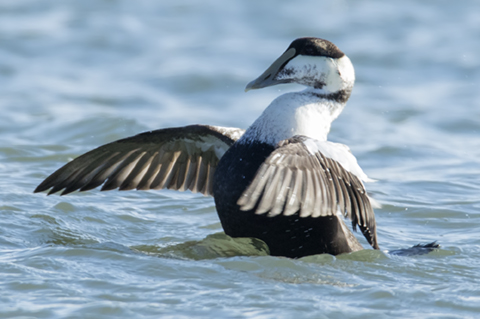
They have waterproof feathers that they preen regularly. After preening, they often flap their wings, as you see with the Common Eider to your left.
Ducklings walk in a line after their mother. Who hasn't "awed" when seeing a picture of a mommy duck and her chicks walking in a line? That line thing is a trait. Said another way: "getting your ducks in a row."
They are omnivores, eating both plants and small animals.
They practice monogamy during the breeding season.
When ducks preen, they collect a special oil from the preen gland near their tail. Then, rub it all over their bodies, making their feathers waterproof.
All waterfowl have webbed feet with broad, flat bills. They travel in flocks. The offspring of all three waterfowl species imprint on the first thing they see, assuming that it is their mother.
Scientists differentiate ducks from geese or swans based on the number of neck bones they have. Ducks have 16 or fewer neck bones, while geese and swans have 17 to 24 neck bones.
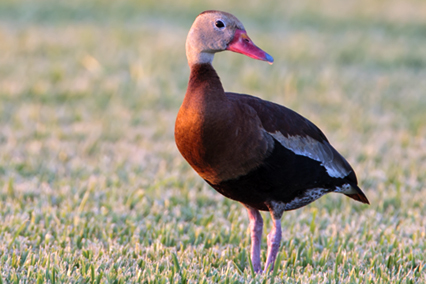
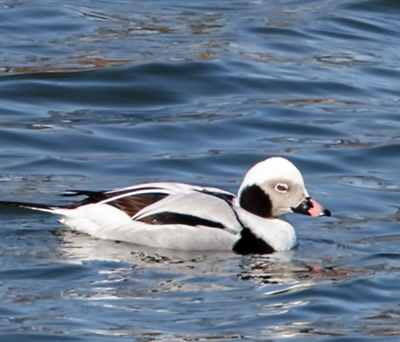
Ducks are either dabblers or diving ducks, with several significant structural differences between them.
Dabblers have colorful wing markings, long wings, and legs in the center of their bodies. They sit higher in the water. When feeding, they put their heads down in the water, and their bottoms are above the water. They typically are closer to shore. They float higher in the water and shoot straight up in the air on takeoff.
Divers have duller coloration, small wings, and legs at the back of their bodies. They sit lower in the water and totally submerge their bodies, staying underwater for several minutes. Divers are typically farther out in the water and sit lower in the water. When taking off, they tend to run across the water since their wings are so short.
What are the Physical Differences between Ducks and Geese?
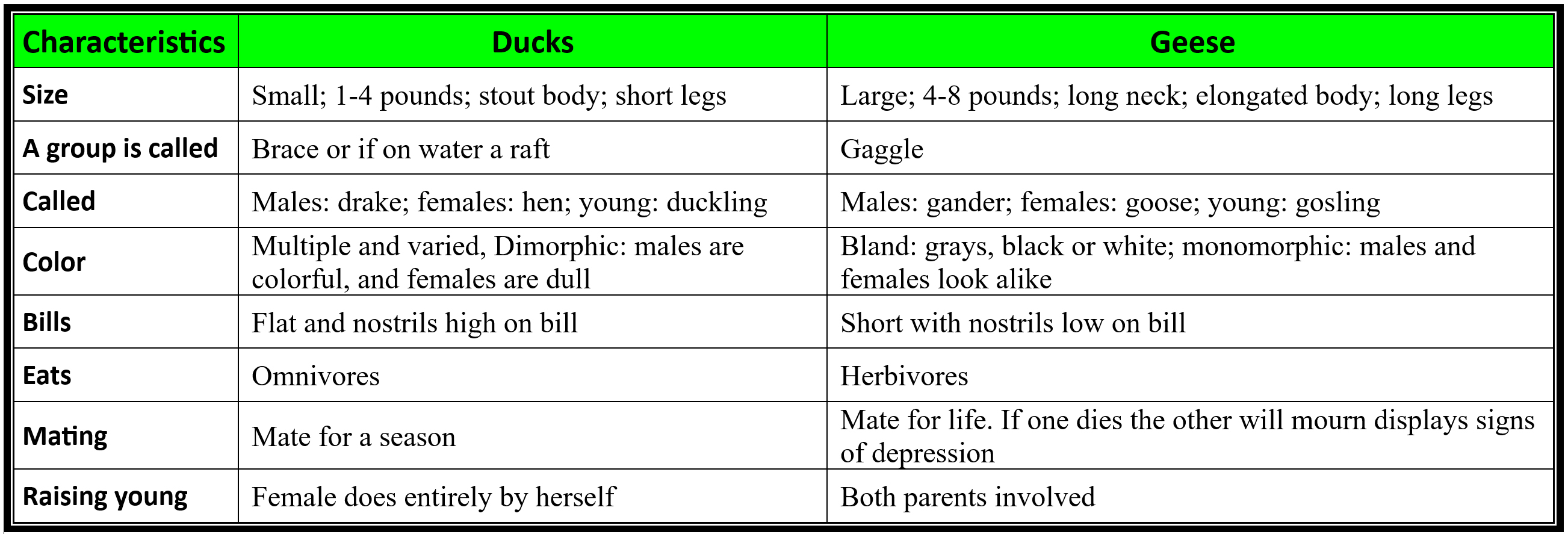

We Are Not Ducks!
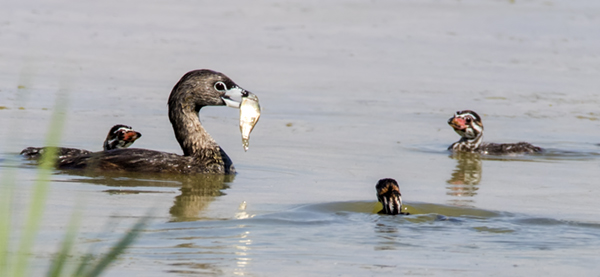
Grebes are not ducks but are considered waterfowl. They have lobed toes, an adaptation that helps them propel themselves underwater for feeding.
Research has shown they are most closely related to flamingoes even though there is no outward resemblance between the birds.
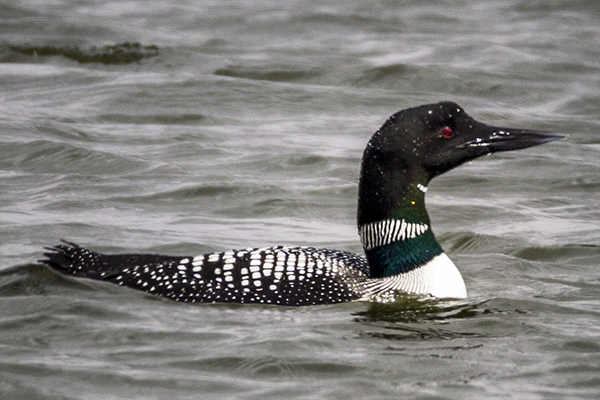
Loons aren't ducks or waterfowl. Their feet are webbed, but their legs are set well back, preventing them from walking on land like ducks.
Loons have large, dagger-like bills. They are usually set very low in the water, giving them a unique profile. Typically, they are solitary and further out in the water than other ducks. They are divers and carnivores.
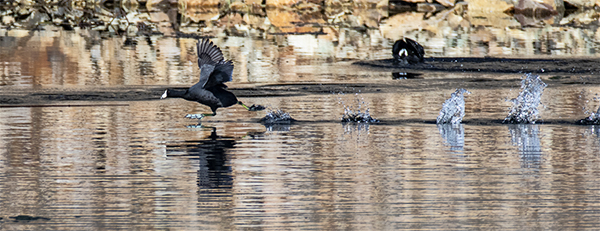
The American Coot is neither a duck nor a waterfowl. The Coot does not have webbed feet. They have long, lobed toes.
The American Coot has a distinctive white bill with a black ring on the tip. At the top of the bill is a spot of red. It is dark gray to black with a chickenlike shape. The legs are yellow green in color.
Typically, you will see them in groups ranging from small to large. When taking off, they run across the water's surface until they get enough lift to fly.
Below the picture carousel, follow the links to the different waterfowl featured on this site.
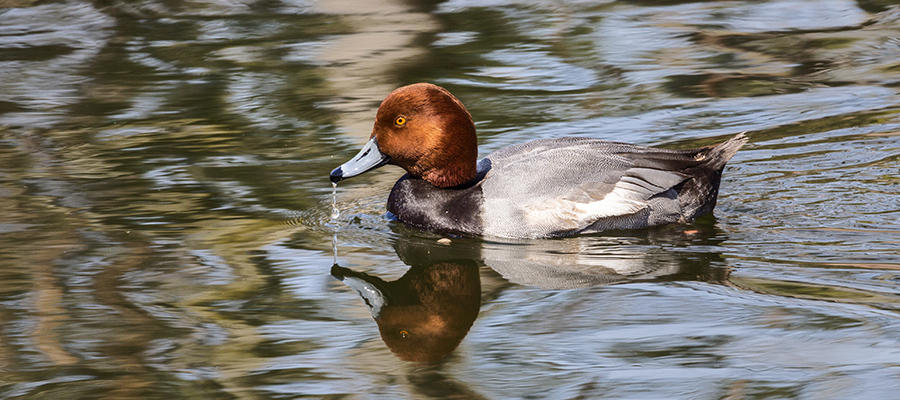
Redhead Duck
Courting male Redhead ducks do a dramatic "head throw" display. Bending their head back and touching its tail. Then snaps his head forward giving a loud call.
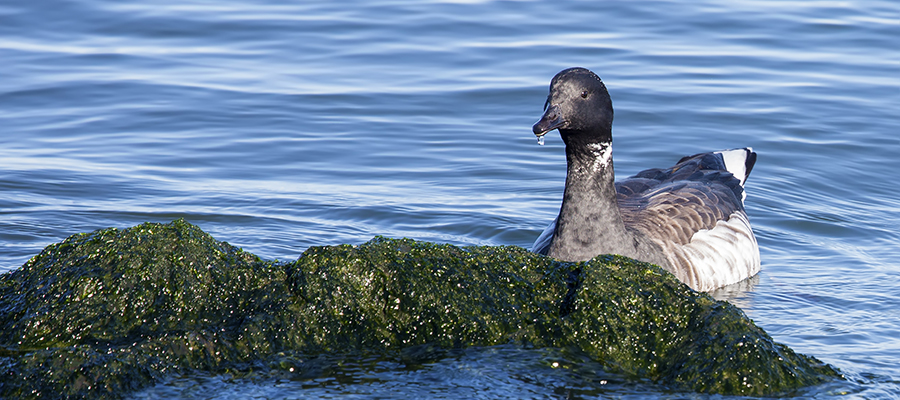
Brant Goose
Brants nest and raise their families in the Arctic wetlands that are thick with grasses and sedges.
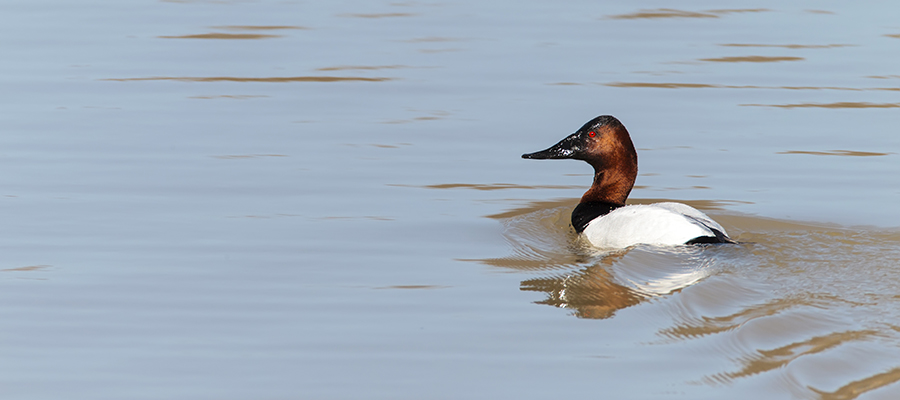
Canvasback
Canvasbacks are diving ducks, in fact they are North America's largest diving duck. They can fly over 62.14 mph 100 km/hr. Canvasbacks build floating nest in wetlands.
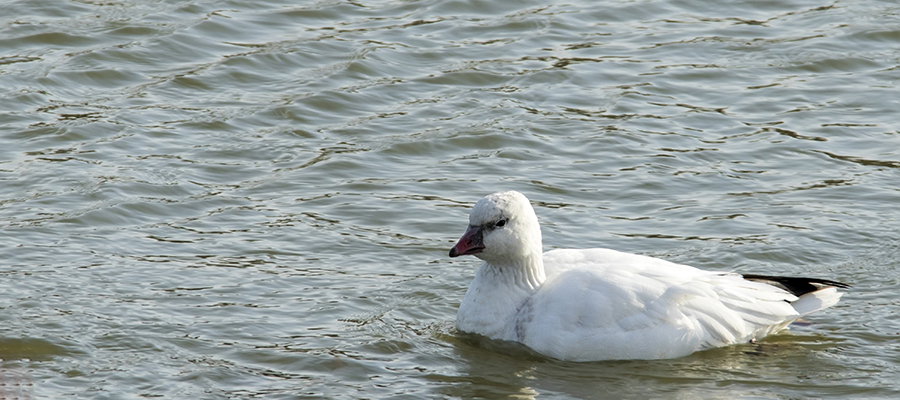
Ross Goose
The Ross Goose is a small goose and ofter confused for the Snow Goose. They nest in colonies in the Arctic.
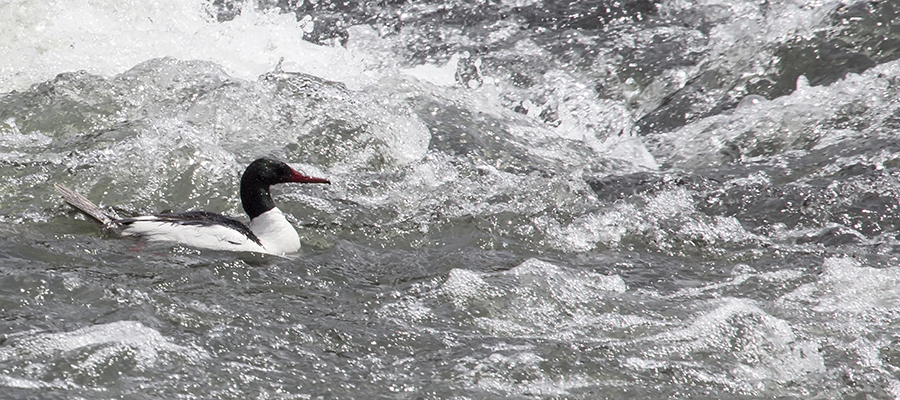
Common Merganser
The Common Merganser is a fish-eater. The female will raise the clutch on her own, which can be six to 17 chicks. We usually have a clutch each year in the Firehole River in the Upper Geyser Basin.