Extremophiles
Living organisms that can live in the world's extreme environments
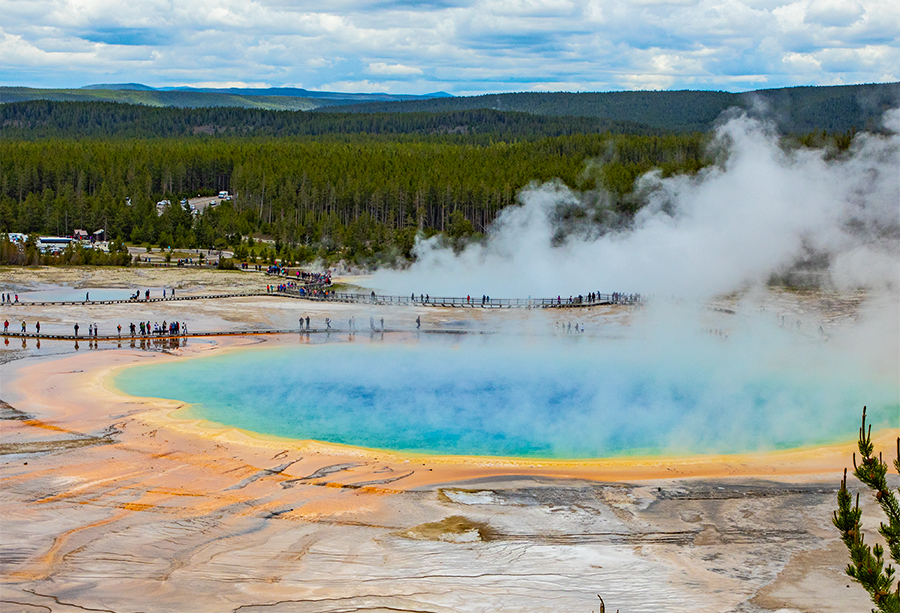
Extremophiles are microscopic organisms that thrive in extreme environments. In Yellowstone, these conditions can include extreme heat or an altered pH—either very low pH (acidic), very high pH (alkaline), or a combination of heat and altered pH.
The environments of extremophiles would kill other organisms. However, if their environment changed to conditions we would consider more hospitable, the extremophiles would perish.
Extremophiles are a type of microorganism, a small living thing that must be viewed with a microscope. However, colonies, or large groups of microorganisms living together, are visible in many of Yellowstone’s thermal features.
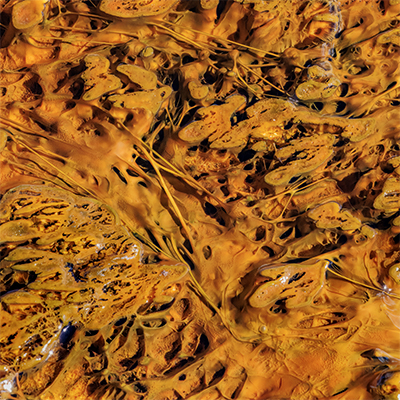
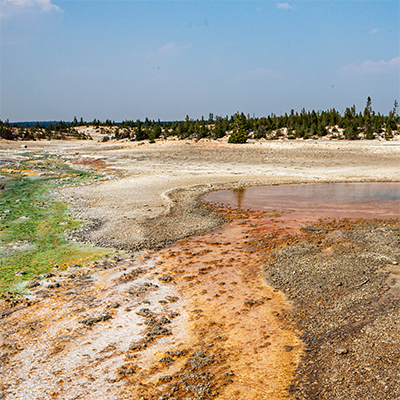
Extremophiles in Yellowstone fall into two categories:
- Thermophiles are microorganisms that live in extremely hot environments.
- Thermophiles thrive in temperatures above 113° F (45° C).
- Hyperthermophiles thrive in temperatures between 176° F (80° C) and 235° F (113° C).
- Some extremophiles require hot conditions but also thrive in environments with altered pH.
- Acidophiles thrive in environments with a pH level of 1 to 5. So, the acidophiles in Yellowstone are actually thermoacidophiles—they thrive in hot and acidic environments.
- Alkaliphiles live and grow in environments with a pH level of 9 to 11.
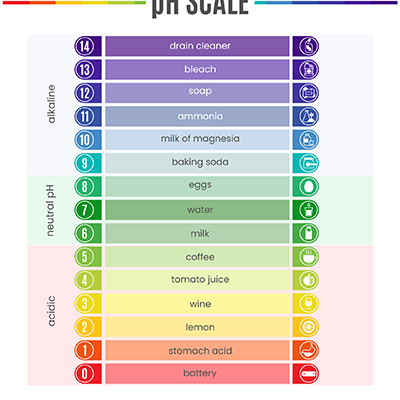
Let us review what pH measurements mean: pH is a scale of acidity and alkalinity ranging from 1 to 14, with seven indicating neutral, neither acidic nor alkaline. Any pH below seven is considered acidic; anything above is alkaline or basic. A substance with a pH close to 1 would be a powerful acid; a pH close to 14 would be highly alkaline.
To better appreciate the impact of pH, comparing the conditions in Yellowstone’s thermal features to those tolerated by humans may be helpful. In the human body, our normal pH is 7.35 to 7.45. A pH above 7.8 or below 6.8 is generally fatal. Our pH may vary slightly from 7.35 to 7.45 during the day, but only by minute amounts.
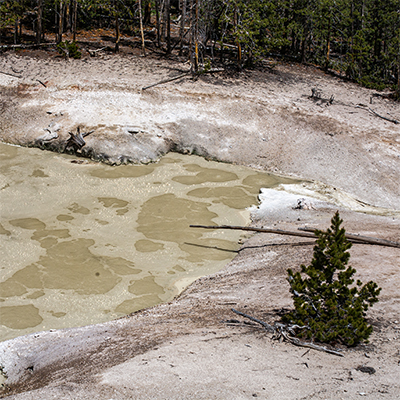
Other extremophiles found throughout the world include:
- Barophiles are microorganisms that survive under tremendous pressure.
- Halophiles are aerobic (oxygen-using) microorganisms that live and grow in high-salinity environments.
- Psychrophiles thrive in extreme cold. They grow best in environments between 14° and 68° F (-10° and 20° C).
- Xerophiles live in arid environments.
“Normal” microorganisms are called mesophiles. They grow best at temperatures between 50° and 122° F (10° and 50° C).
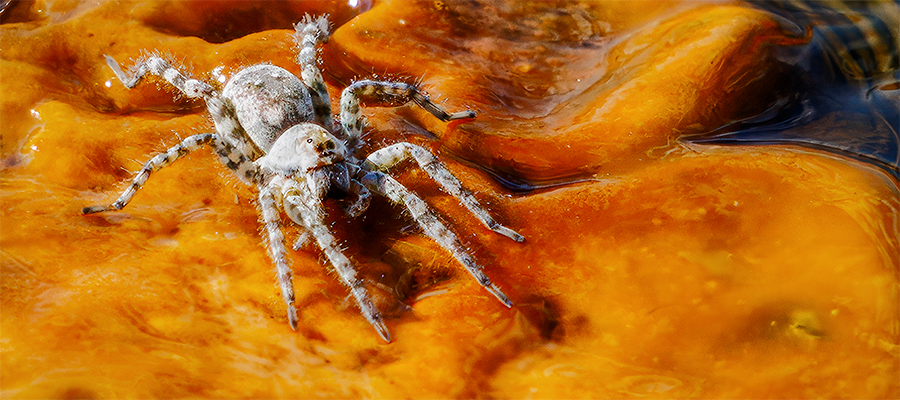
Wolf Spider
A small Wolf Spider on the bacteria mat in Sapphire Pool's runoff.
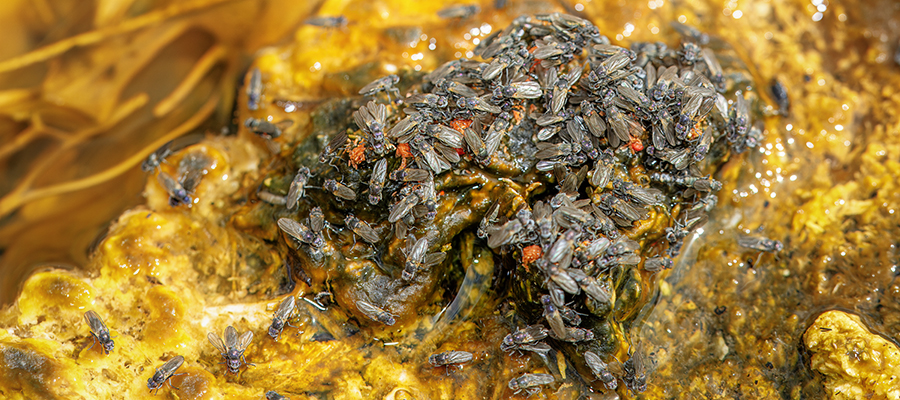
Ephydra Thermaphilia
Ephydra egg mass on the bacteria mat in Sapphire Pool's runoff. Yes there is life that can live in this extreme environment and prosper.
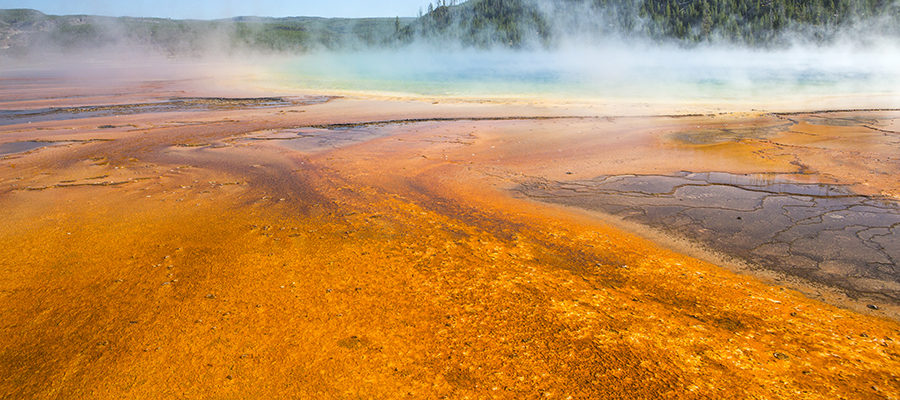
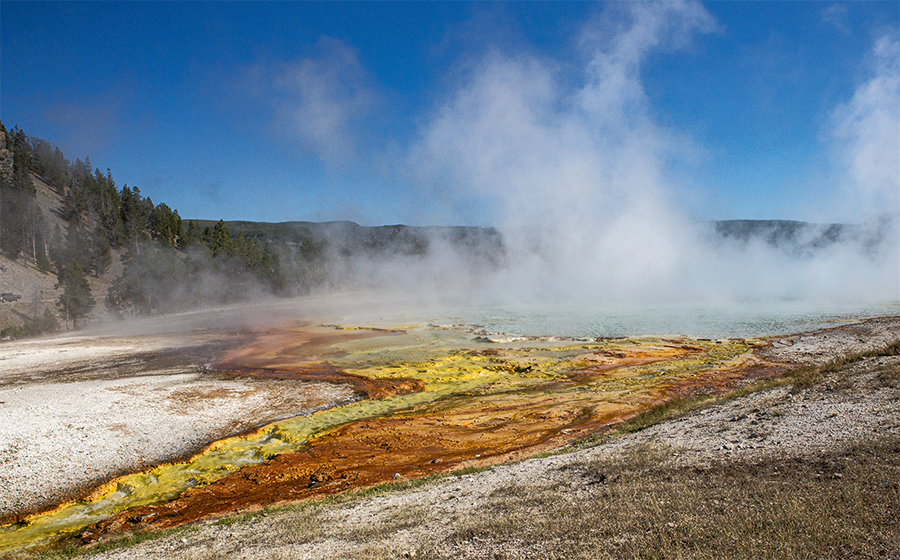
Grand Prismatic Spring Runoff
The world-renowned Grand Prismatic Spring has beautiful runoff. Where the orange is, the water is hotter than where the brown bacteria exist.
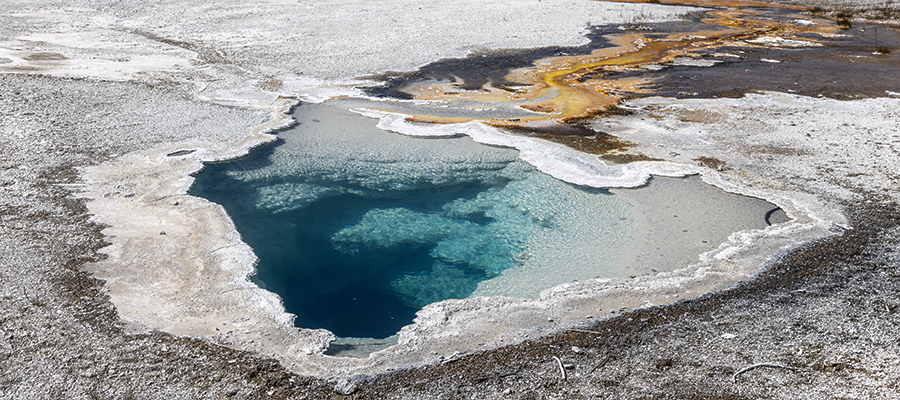
Heart Spring on Geyser Hill
Heart Spring is a blue pool. Telling you the temperature is at or above 167°F and no bacteria are growing. What you are seeing is the reflection of the light.
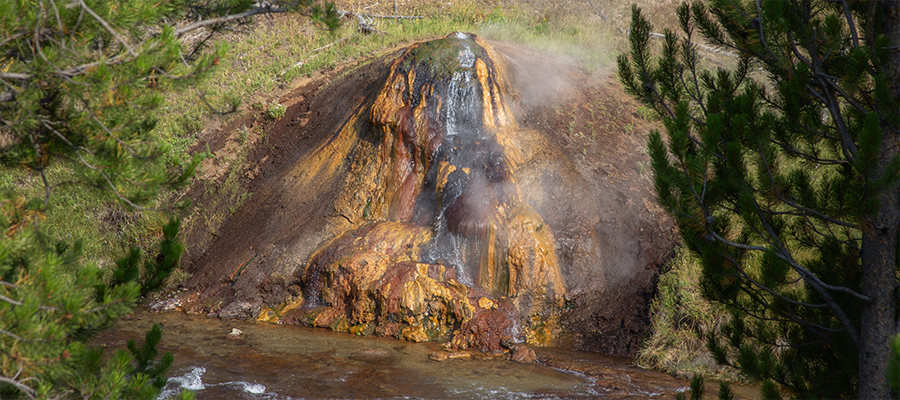
Chocolate Pots on Gibbon River
The color of the Chocolate Pots doesn’t come from bacteria; instead, it comes from minerals. The rich-yellow and red-brown come from a combination of iron oxide, aluminum oxide, and manganese oxide.