Firehole River
A Vital River Running Through Multiple Geyser Basins
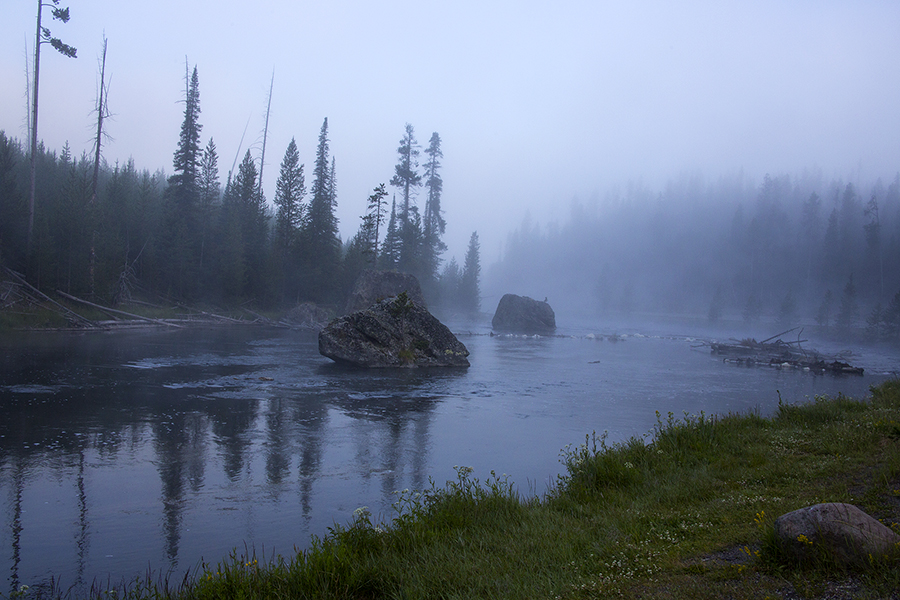
The Firehole River starts as a backwoods stream and becomes a 21-mile-long river. The Firehole is a river that flows through some of Yellowstone National Park's most beautiful sights.
As it flows north, its first two significant sights are the Lone Star Geyser and the Kepler Cascades.
At the east end of the Kepler Cascades parking lot is the trailhead for Lone Star Geyser, a beautiful 4.8-mile round-trip walk along the side of the Firehole River on an old service road. I enjoyed watching a Common Merganser mother and her chicks swimming on the river during the summer of 2013. Lone Star erupts about every three hours.
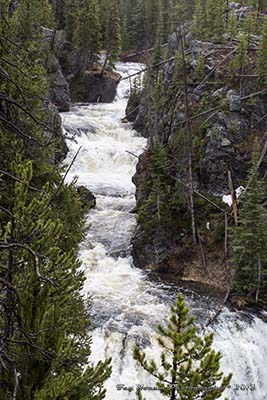

The Cascades are just 2.7 miles south of the Old Faithful Area and a few steps from your car. The Cascades is a series of tiers that drop the Firehole River water over 100 feet into the Devil's Gorge.
Then, the river moves into the Upper Geyser Basin, the home of Old Faithful Geyser and Inn. The iconic 1904 Old Faithful Inn is within 150 yards of the Firehole River. The geyser is even closer.
Because the river flows through the geyser basins, its temperature can reach 80°F (27°C) in the summer. The geysers and streams along its path drain tons of minerals into the water. Both are good reasons why you don't usually see many fish in the river as it goes through the Upper Geyser Basin.
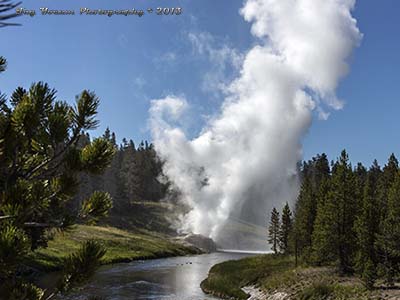
In the picture on the right, you see Riverside Geyser erupting, and the spray and runoff end up in the Firehole River. Riverside Geyser's temperature is 201.2°F (94°C). And Riverside is only one of the geysers spilling hot water and minerals into the river.
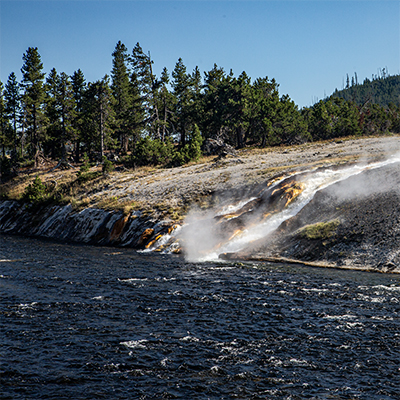
The Firehole continues to flow north through and by the Midway Geyser Basin, as seen to the left. Did you catch that I said it flows north? Most of us are familiar with rivers flowing south, so why north in this case? It is simple. The Firehole starts just above the Continental Divide. Meaning water from the Firehole will eventually end up in the Pacific Ocean.
The Firehole River continues rambling along through the Lower Geyser Basin.
As it emerges from the basins, the water is tranquil, going for a distance until it starts to enter the Firehole Canyon. There are rapids at that point, and the water goes over the Cascades of the Firehole, where it drops 20 feet.
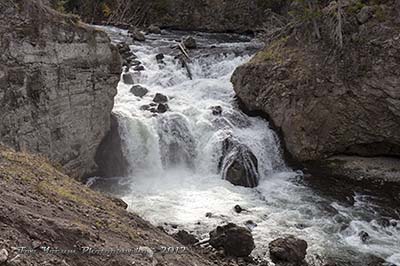
Just a short distance later, the Firehole takes another drop at the Firehole Falls. Firehole Falls drops the Firehole River 40 feet as the river cuts through the Firehole Canyon. Rapid and noisy at the falls, just a short distance upriver, the water is tranquil and belies the rage that will soon take the river through the canyon.
The river eventually joins the Gibbon River to form the Madison River, which flows out of the western part of the park and continues to the Pacific Ocean.
So, why is the Firehole River called that? First, you need to know that a "hole" is how fur trappers would refer to mountain valleys. So, for example, if they are talking about Jackson Hole, they are not referring to the town of Jackson, WY, but to the area. It appears the river may have been named by Jim Bridger in 1850, when he and a large group "saw the geysers of the lower basin and named the river that drains them the Fire Hole."1
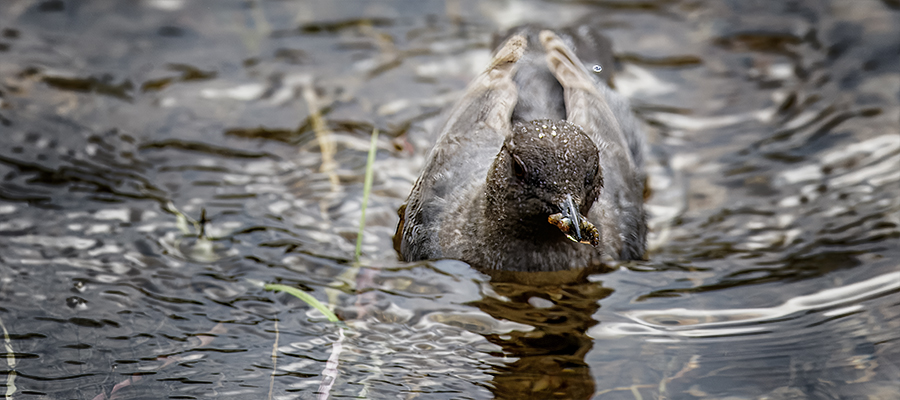
American Dipper on the Firehole River
The Firehole River is more than just a river. It is home to many creatures. Here you see an American Dipper with food in its beak for the kids.
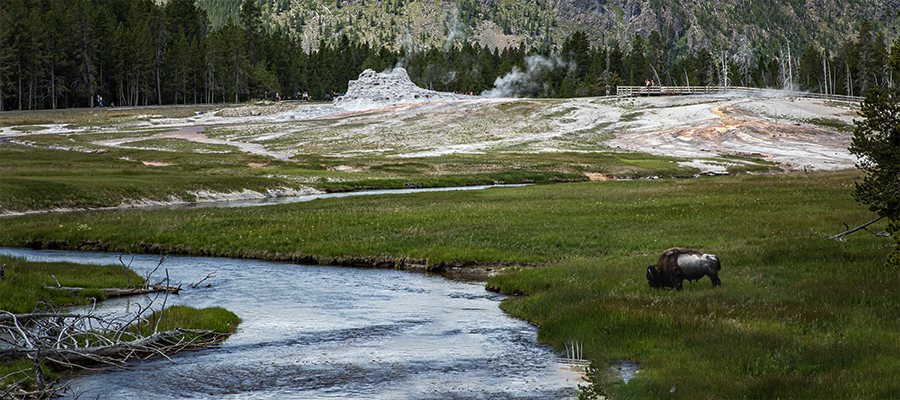
Firehole River Cutting Through Upper Geyser Basin
The Firehole River cuts lazily through the Upper Geyser Basin meadows. Bison grazing with Castle Geyser in the background.
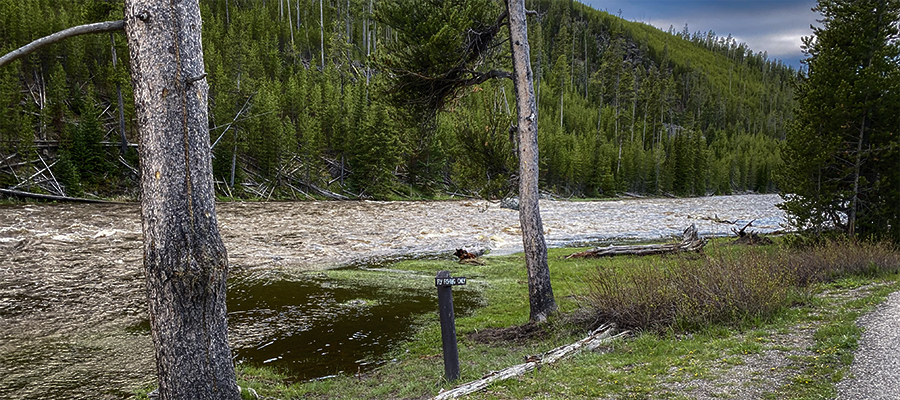
Raging Firehole River
This image was taken of the Firehole River the evening of the 6/13/2022 500-year flood in Yellowstone. The river is moving fast here and over its banks.
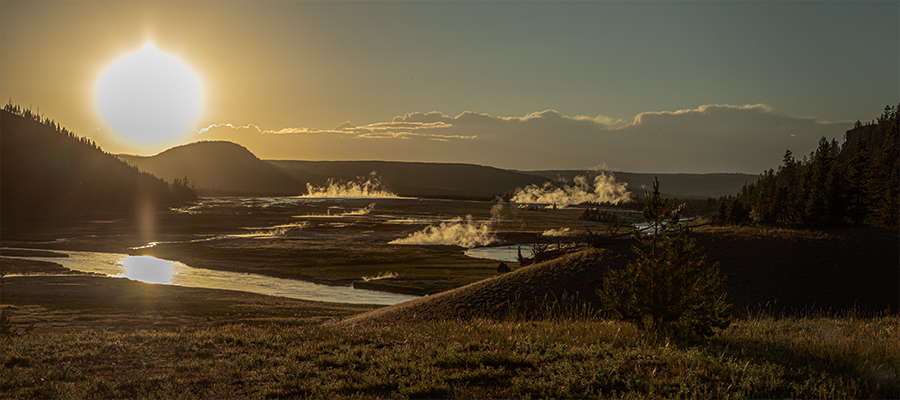
Firehole River Sunset
Firehole River cutting in front of Midway Geyser Basin as the sun is setting.
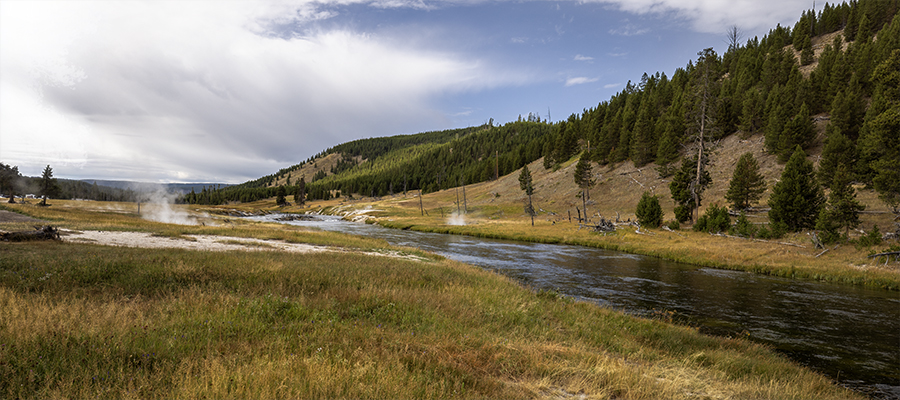
Firehole River at Fairy Falls Trailhead
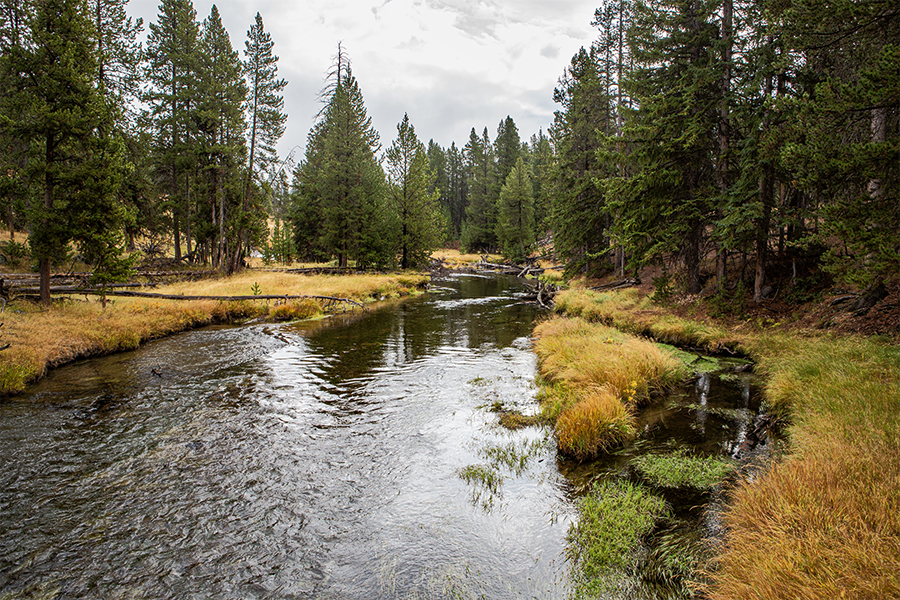
Looking south from the Fairy Falls trailhead bridge at the Firehole River.
1Whittlesey, L. H. (2006). Yellowstone Place Names. Gardiner, MT: Wonderland Publishing Company. Page 105.