American Dipper
Did you know this little bird is the only aquatic songbird in North America?
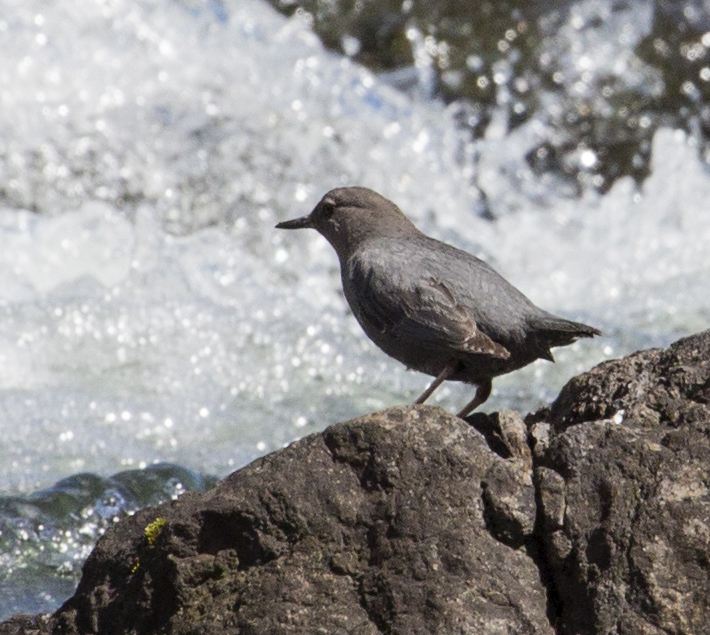
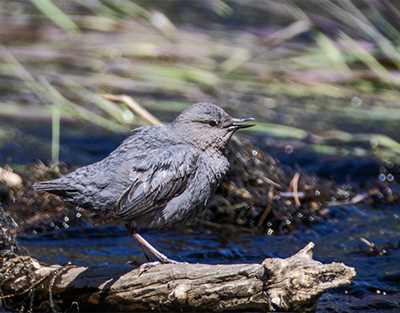
The American Dipper is the only aquatic songbird in North America. (To better understand songbirds, check out this page.)
The American Dipper is one of only five species of dippers worldwide and the only one in North America. Its name comes from the rhythmic bobbing of its tail. The American Dipper will perch on logs or rocks in fast-moving streams or rivers.
Dippers rarely fly any distance away from the water course. They usually fly low and fast over the water.
If you are incredibly observant and lucky, you may see them dive into the water headfirst and use their wings to fly or swim underwater.
These tiny birds will walk on the water bed, looking for food. They consume aquatic insects and larvae and have been known to eat other invertebrates, small fish, and fish eggs. Their preferred dinner consists of the larvae of caddisflies, mayflies, stoneflies, midges, and mosquitoes.
The dipper is not flamboyant, with a gray body and brownish head feathers. Unlike most songbirds, the American Dipper loses all of its flight feathers at once, rendering it flightless for a period of time.
The American Dipper does not migrate, but if its chosen waterway freezes, it will move to a larger open body of water. They prefer rocky and unpolluted streams.
Dippers have a thin white line of feathers on both eyelids, creating a white flash when the bird blinks.
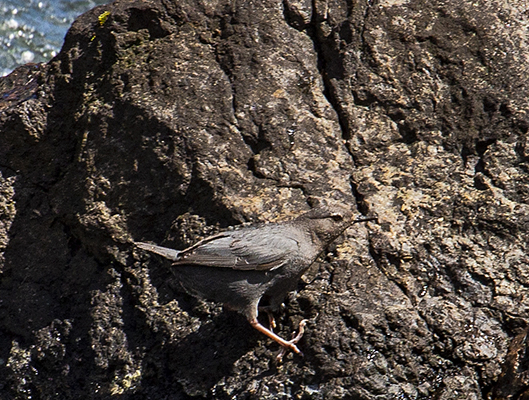
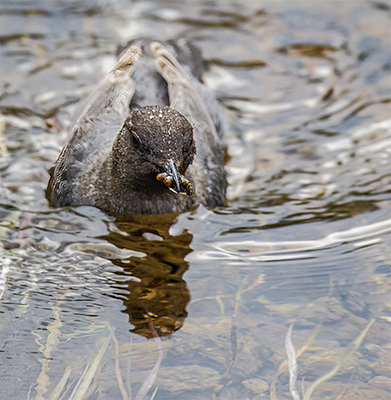
American Dippers females build their nests near the water on a rocky ledge or riverbank, sometimes under a bridge. They have 3-6 eggs, which the female incubates for 13-17 days. Once hatched, both parents feed the nestlings. The chicks leave the nest about 18-25 days later. They can swim and dive almost immediately.
Young chicks have yellow beaks and can be pretty demanding for food, as shown in the picture below.
In the summer of 2023, a nest was built under the Old Faithful bridge going to Geyser Hill. Thousands of people go over it daily, never knowing they are there. Three chicks had to drop down about four feet to the water to get out of the nest.
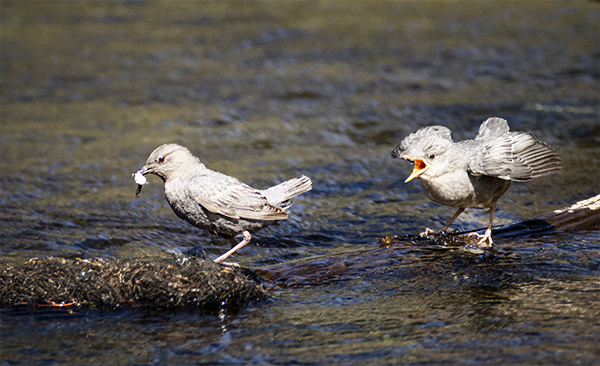
Below the picture carousel, follow the links to the different songbirds featured on this site.
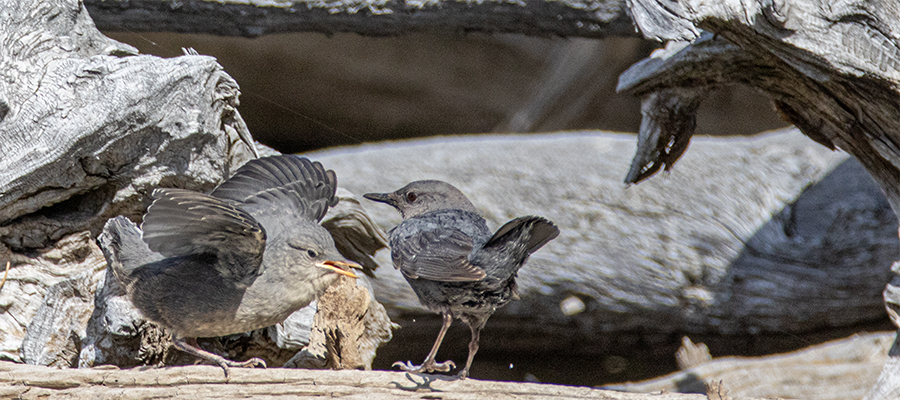
American Dipper Chicks
A squacking American Dipper chick calling for food.
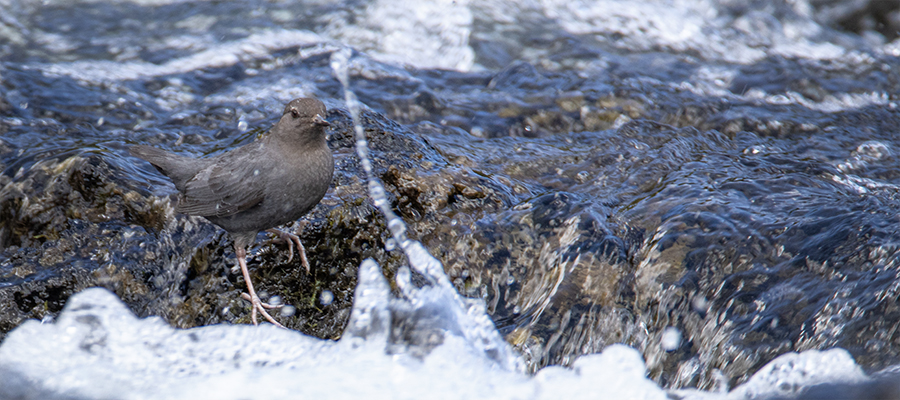
American Dipper
Water splashes up at a nonflinching American Dipper.
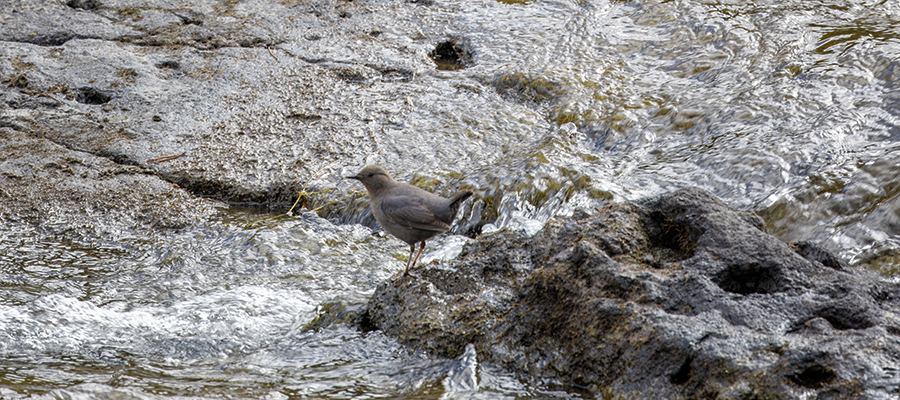
American Dipper Watching for...
American Dipper watching the water go by.
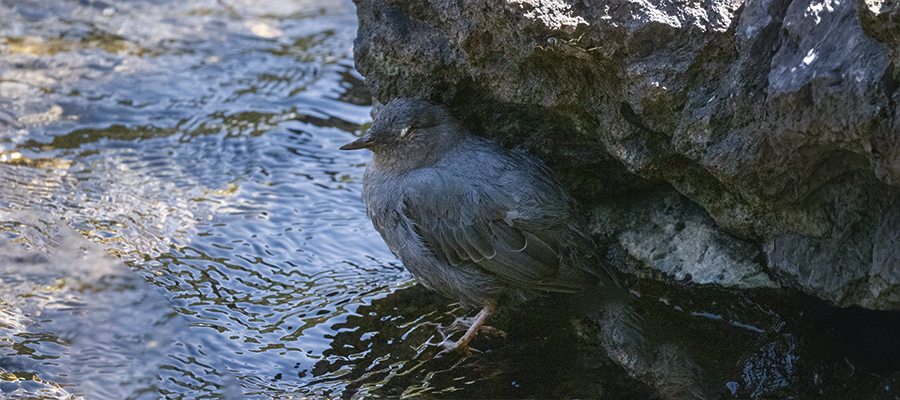
Can't Find Me Here
A young dipper hiding behind the rock, it was hard to spot it.
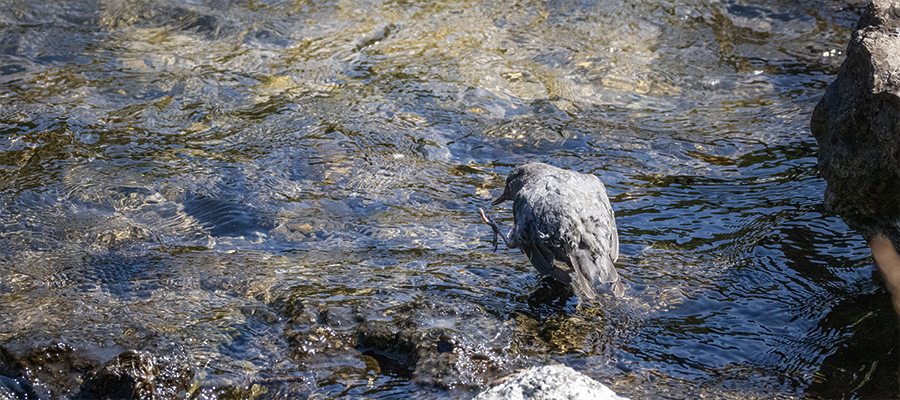
What did I step in???
Did this dipper step in something? Maybe has a bug between his toes?