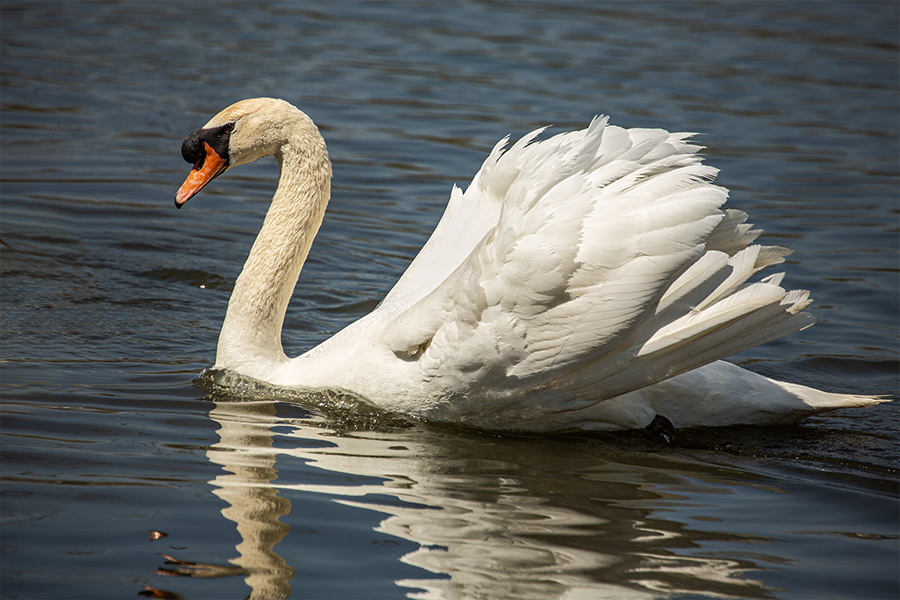
Mute Swan
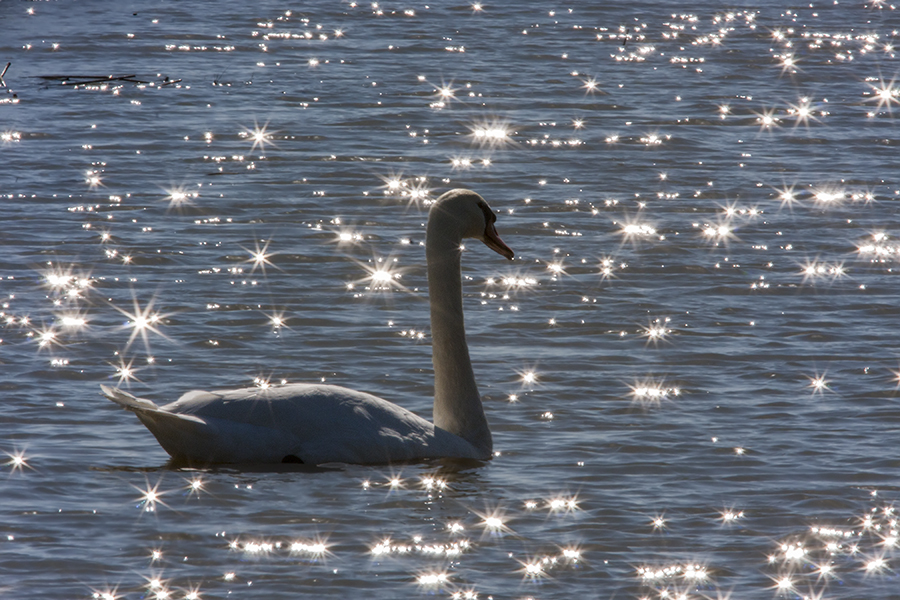
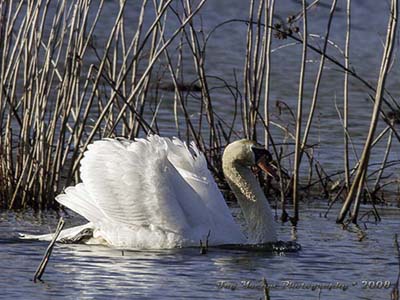
Male swans are called cobs, females are known as pens, and the downy young are cygnets.
If you see a swan with its feet out of the water, it either cools or warms itself, depending on the season. A close examination of their webbed feet reveals numerous veins and arteries.
What is that black knob at the top of their beak? The knob is called a basal knob. When the scientists determine its purpose, they will let us know. They may serve as an indicator of health or sexual maturity. They tend to be more prominent in males. It enlarges in males during the mating season.
Mute Swans form long-lasting pair bonds.
One Maryland study found that they are voracious eaters, consuming up to 8 pounds of vegetation per day and often outstripping vegetation recovery capabilities.
They can be highly aggressive and have threatened native waterfowl.
Mute Swans are not silent. They are less vocal than other swans. They do make hissing noises.
They have a wingspan of seven to eight feet.
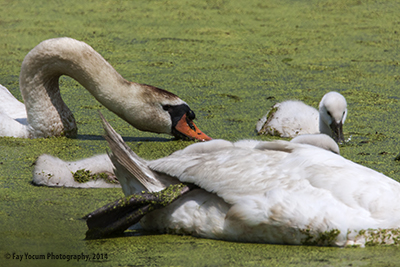
Swans are waterfowl, a group of birds that includes ducks, geese, and swans. To learn more about waterfowl, check out this page.