Grand Geyser
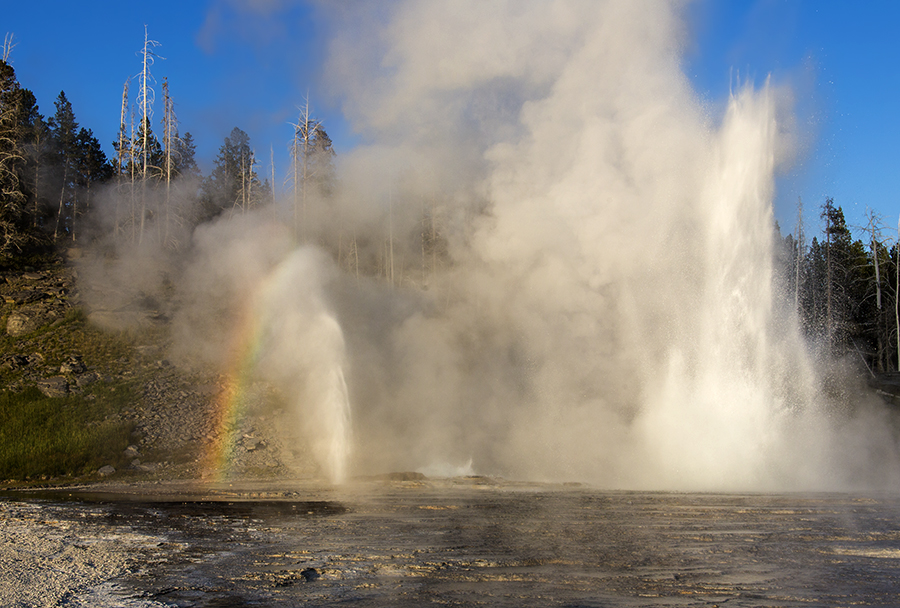
Grand Geyser is in the Upper Geyser Basin north of Old Faithful Geyser. Grand Geyser puts on a fantastic show with its neighbors, Turban and Vent Geysers, and is a must-see whenever you are in the Old Faithful area.
Like Old Faithful Geyser, there is seating for you to wait for and watch the eruption. This area lacks shade and can get extremely hot during the summer. You should carry plenty of water for everyone in your party and drink while you wait. That wait can be considerable, depending on the current window. Your wait may be 2-4 hours. That said, it is absolutely worth the wait, but planning is encouraged.
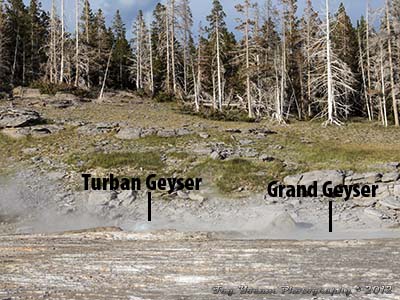
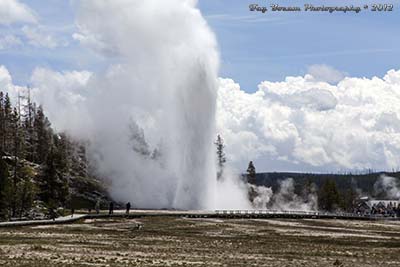
Grand Geyser is a fountain-type geyser, the most common type in Yellowstone. A fountain-type geyser erupts from a pool, typically has no cone, and splashes water and steam rather than sending up jets of water.
Grand Geyser is one of only six predicted geysers in the park.
Grand Geyser has a long interval, the time from the start of the last eruption to the beginning of the current eruption. Over the last several years, the interval has ranged from 6 to 7.5 hours. The window was between 45 minutes and 2 hours on either side of the predicted time. Yes, timing can change sometimes several times in the season as rangers monitor and adjust times to ensure as many visitors as possible can see this wonder of Yellowstone.
Predictable geysers appear to have separate plumbing systems from those around them, so their behavior is not affected by other geysers. But remember, it is only a prediction, not a guarantee.
Many geysers have pre-eruption indicators or preplay activity. One of Grand's pre-eruption indicators is the Turban Geyser. Turban Geyser is the most apparent geyser at Grand's location. Turban Geyser is higher than Grand's pool. Turban erupts every 17-25 minutes and splashes for about 5 minutes each time. When Turban erupts, the water level in Grand's pool will drop. During one eruption of Turban Grand's pool, the water level doesn't appear to fall. Then, you probably will see a ripple of waves in Grand's pool, which usually signals Grand's forthcoming eruption. That said, Grand has erupted without a Turban occasionally, and Grand doesn't always erupt when you see "waves on Grand."
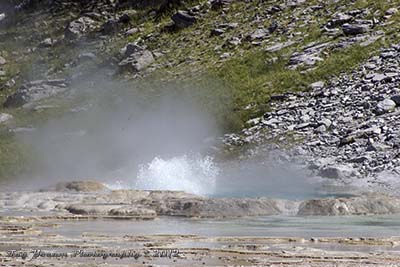
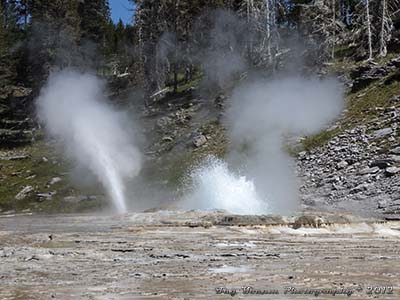
Vent Geyser is on the left shoulder of Turban Geyser. Vent Geyser will start once Grand's eruption begins and can send water 70 feet into the air, settling to about 35 feet. After Grand Geyser stops erupting, Vent and Turban Geysers will continue to erupt for about the next hour.
Grand is different from all the other predicted geysers. Grand eruptions involve both fountain- and cone-type geysers.
To complicate a prediction of Grand Geyser are Rift and West Triplet Geysers, which are to the right of Grand. If either of those erupts, the Grand Geyser prediction will be modified and delayed by one hour.
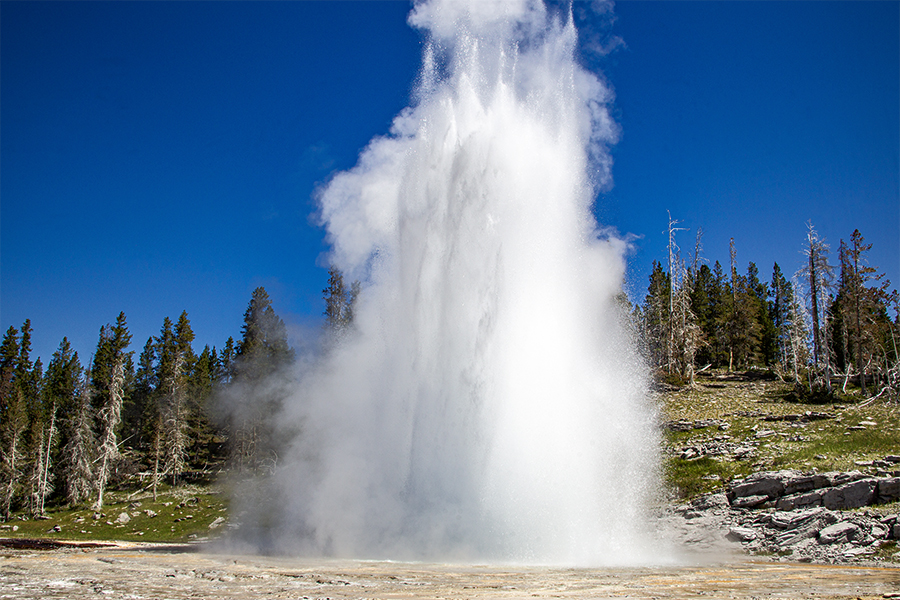
Grand Geyser is a burst geyser, meaning it can erupt multiple times. In contrast, Old Faithful reaches its maximum height only once in an eruption. Grand can erupt over 100 feet on the first burst, lasting 8-12 minutes, and up to 200 feet or more on subsequent bursts, which are shorter in duration. Grand Geyser is considered the tallest predicted geyser in the world.
A Grand burst can have multiple splashes of water. A burst ends when the water drains, exposing the rocks in the basin. If Grand’s pool refills rapidly after the first burst, there may be another burst that reaches higher heights. Most eruptions of Grand Geyser are single bursts. A 1983 eruption had a mind-blowing 11 bursts!
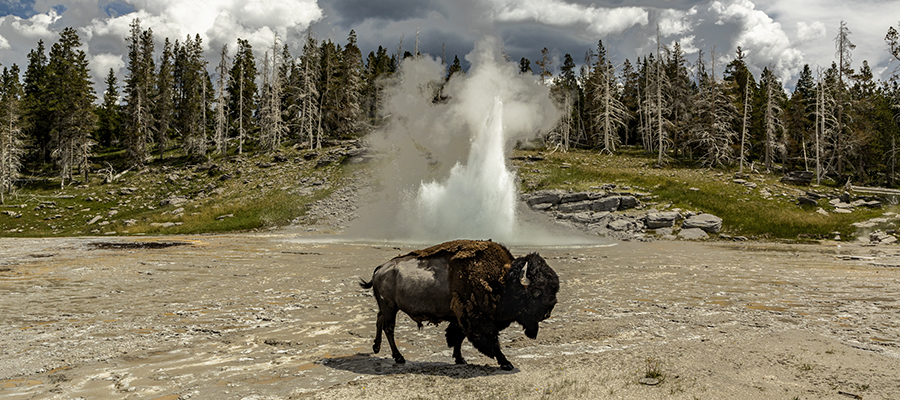
Bison at Grand Geyser
Bison do not flinch or care that a geyser is erupting. It is just another day on the job for them
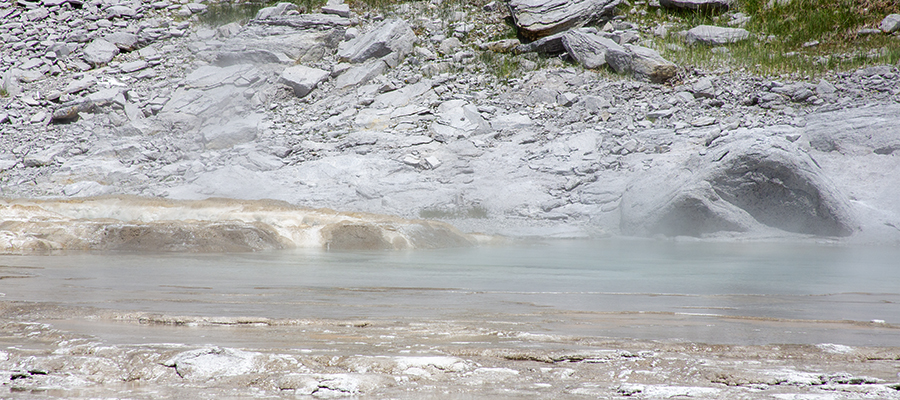
Grand Geyser's Pool
A closer look at Grand Geyser's pool. It should have erupted shortly after this picture was taken.
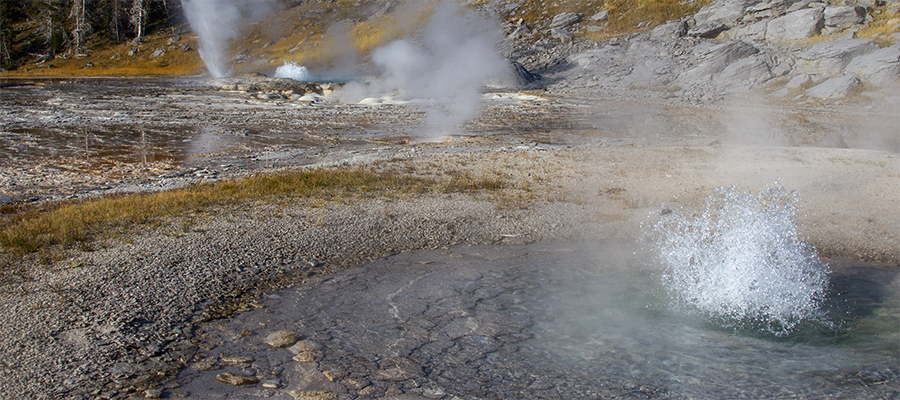
West Triplett Erupting
West Triplett erupting after a Grand eruption. I know that how? Vent and Turban are erupting. Those two only erupt together without a Grand after Grand has stopped. Also Grand's basin is empty, see the rocks.
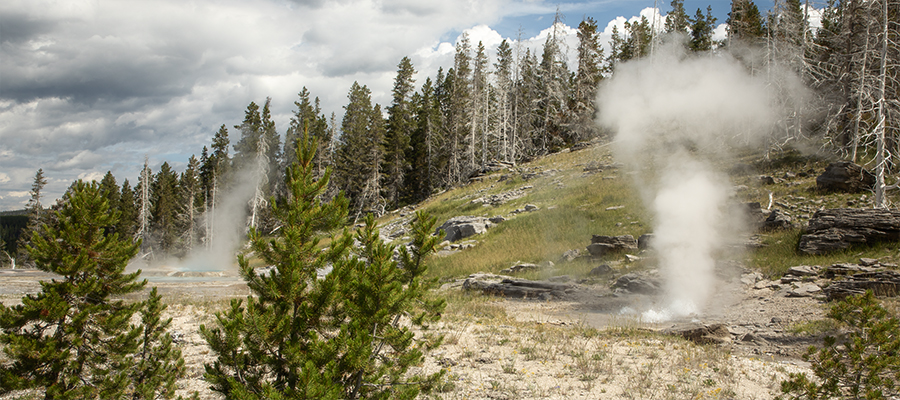
Rift Geyser
Rift Geyser erupting, on the right side of the image, Grand and Turban Geysers on the left.
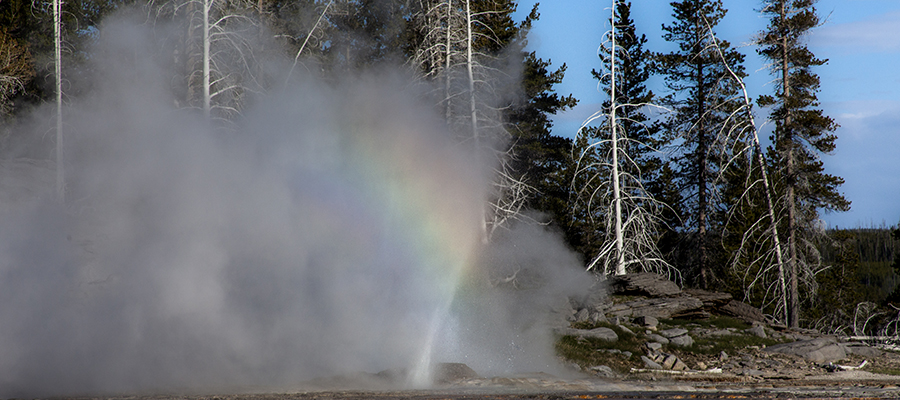
Vent Geyser
Vent Geyser continues to erupt after Grand Geyser has stopped. Rainbow adds to your experience.